Fishing Regulations

Check seasons, size limits, bag limits, and licenses before keeping fish.

Regulations change. This page intentionally points to official Florida Fish and Wildlife Conservation Commission resources instead of repeating limits that can go stale.

Saltwater Regulations Official FWC recreational saltwater rules by species. Freshwater Regulations Rules for bass, panfish, catfish, and freshwater systems. Licenses Buy or renew Florida fishing and boating licenses. Snook Season and harvest details for one of Florida's most checked species. Redfish Red drum rules and regional management details. Seatrout Spotted seatrout limits and season information.

Keep it legal

Take a photo of the latest rule page or keep the FWC app handy when service is spotty. Slot limits, closed seasons, and special areas can change the answer quickly.

Fish Identification

Common First Coast fish

Use the markings and body shape to help identify your catch, then confirm the current rule before placing it in the cooler.

Rules verified July 25, 2026. Regulations can change, and special waters, Fish Management Areas, federal waters, gear rules, and vessel limits may differ. Follow the official FWC link on each card before harvesting.

Saltwater species

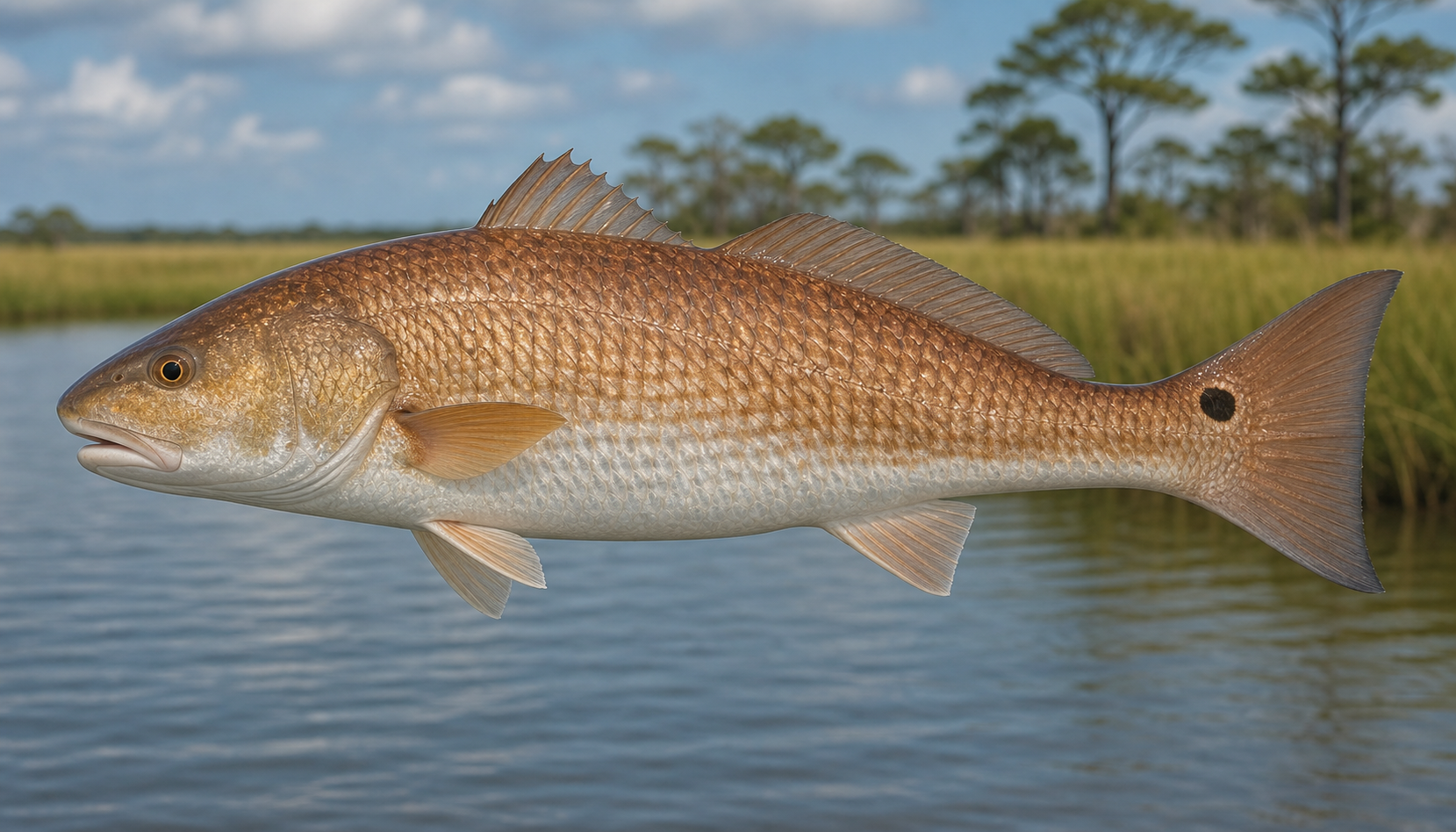
Red drum showing its bronze body and black tail spot
Saltwater

Red drum

Sciaenops ocellatus

Also called: Redfish, channel bass

Identify it: Bronze to copper body, one or more black spots near the tail, and no chin barbels.

Season
Open year-round
Bag
1 per person daily; 4 per vessel in the Northeast Region
Size
18–27 inches total length
Check current FWC red drum rules
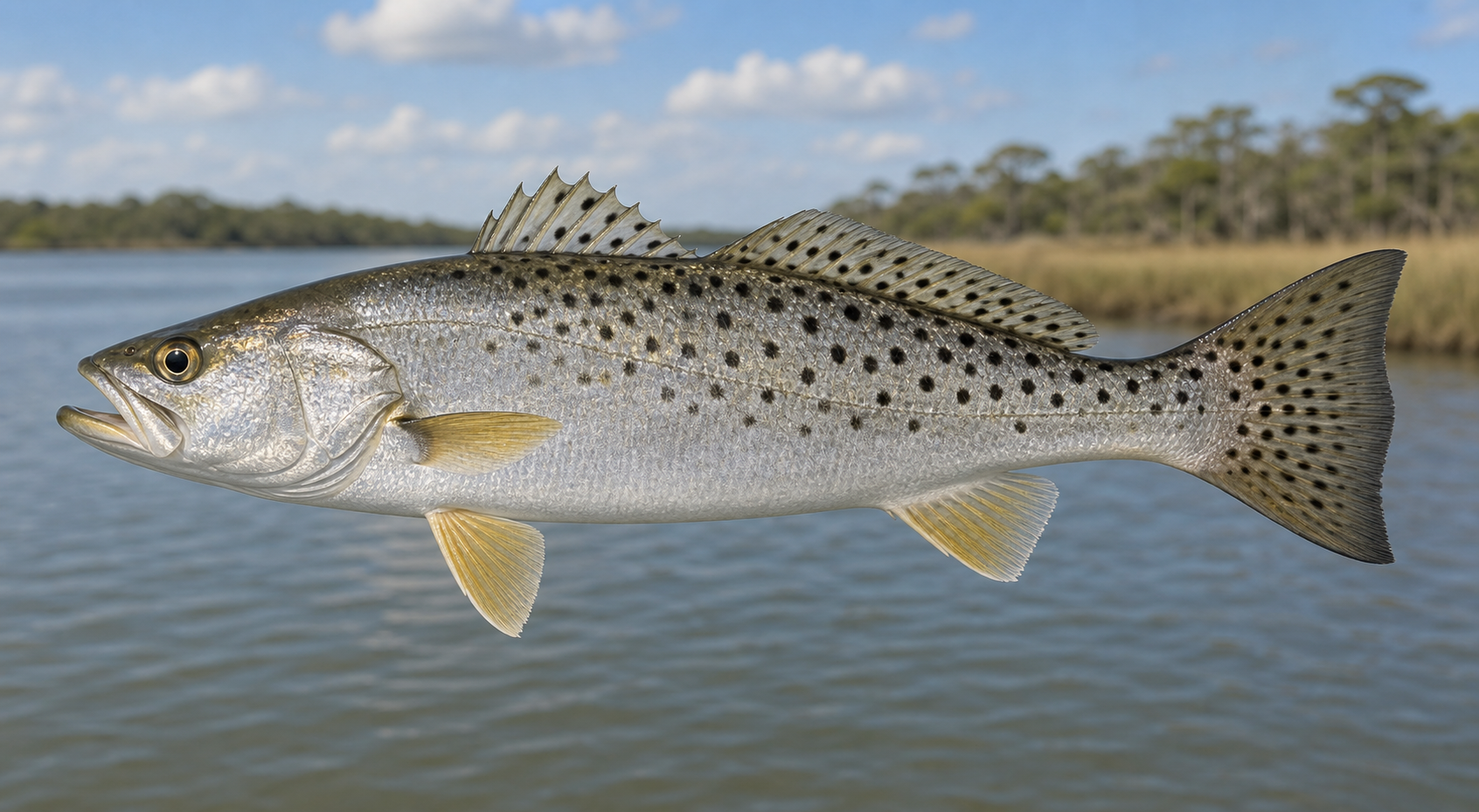
Spotted seatrout showing dark spots across its back, fins, and tail
Saltwater

Spotted seatrout

Cynoscion nebulosus

Also called: Speckled trout, speck

Identify it: Silvery body with many round black spots extending onto the dorsal fin and tail; prominent canine teeth.

Season
Open year-round in the Northeast Region
Bag
3 per person daily
Size
15–19 inches total length; none over 19 inches
Check current FWC seatrout rules
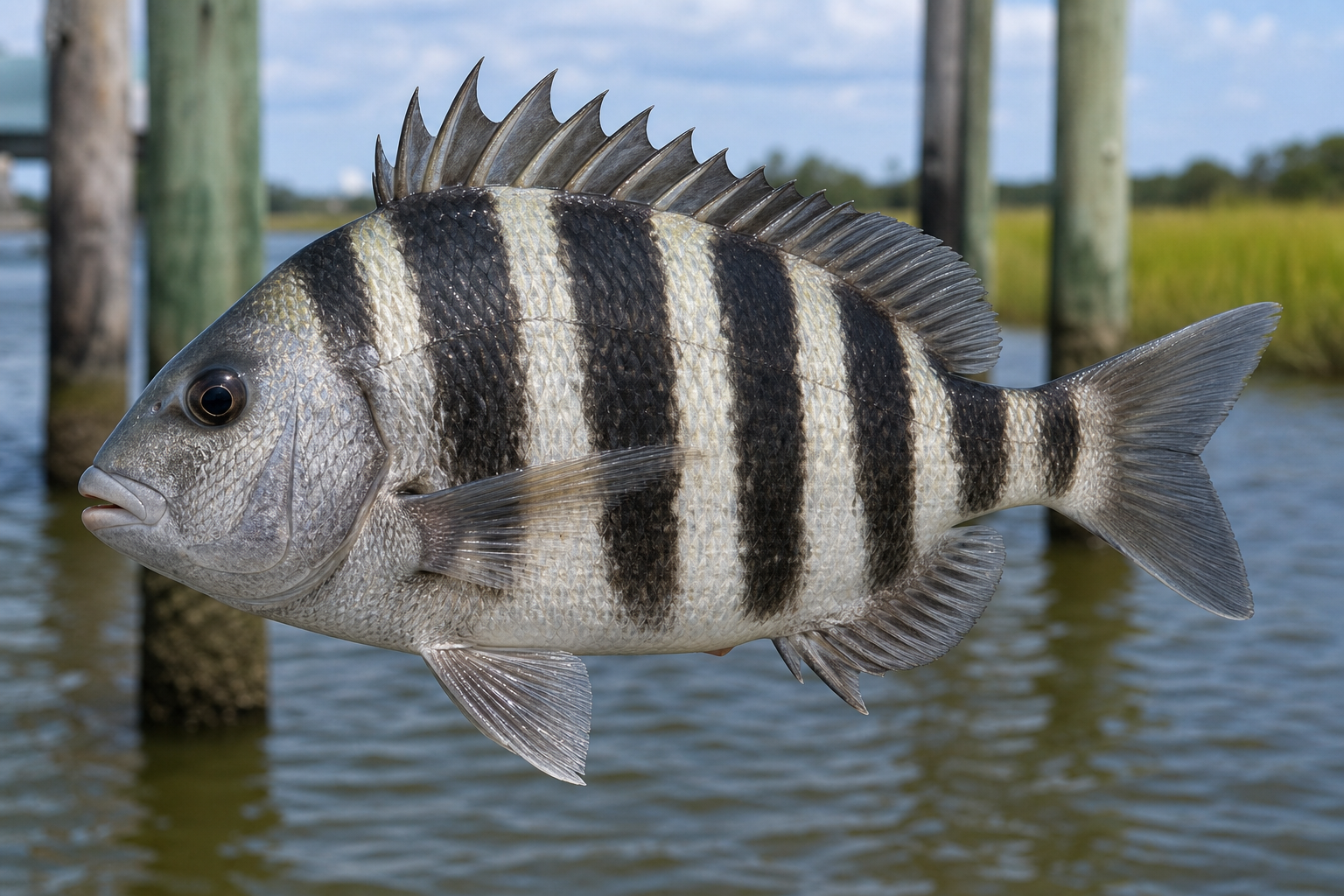
Sheepshead fish showing bold vertical black bars and human-like front teeth
Saltwater

Sheepshead

Archosargus probatocephalus

Also called: Convict fish

Identify it: Deep silver body with five to seven dark vertical bars and distinctive incisor-like front teeth.

Season
Open year-round
Bag
8 per person daily; 50-fish vessel limit in March and April
Size
12-inch minimum total length
Check current FWC sheepshead rules

More inshore and offshore species

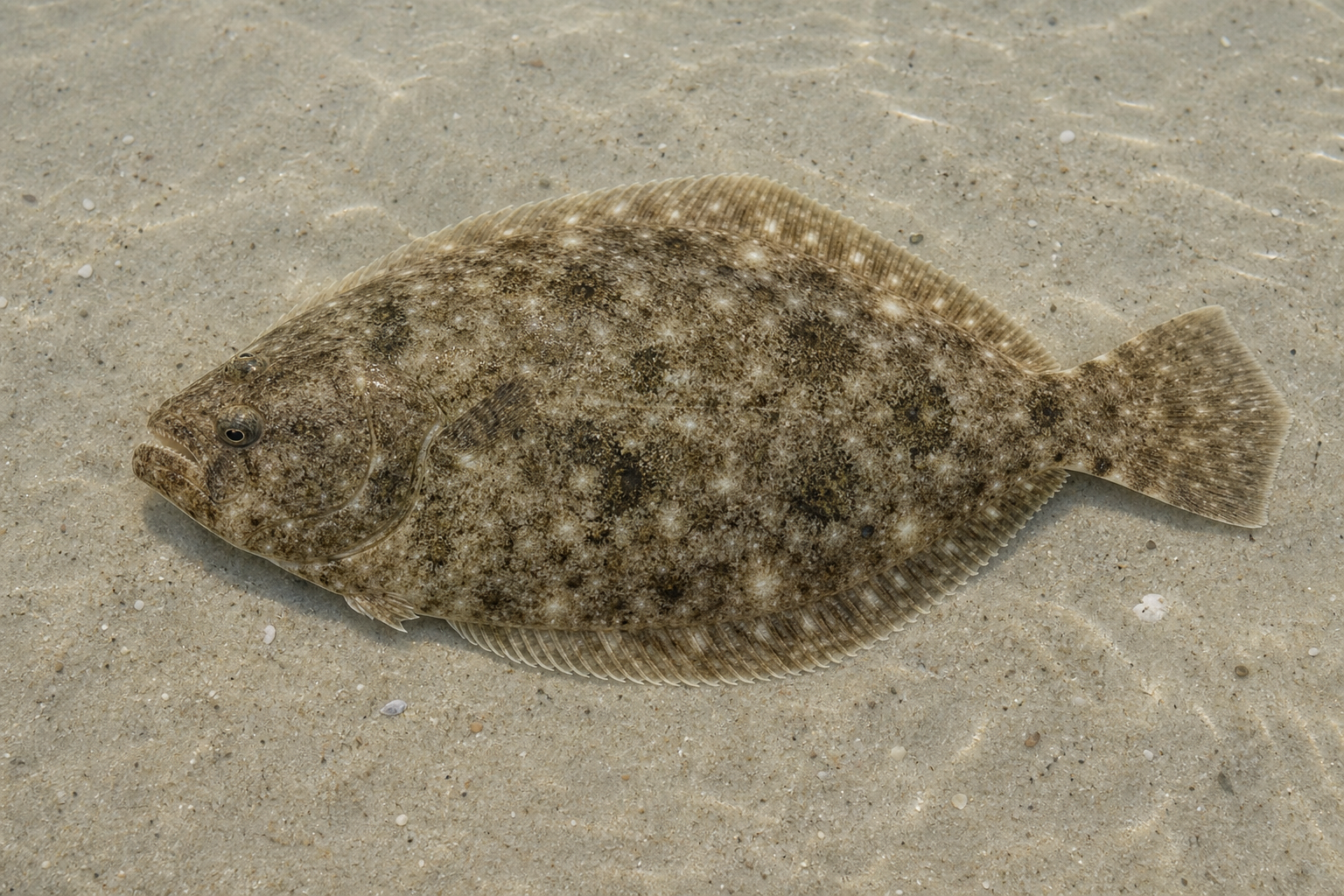
Southern flounder with both eyes on its mottled upper side
Saltwater

Southern flounder

Paralichthys lethostigma

Also called: Flounder, flatfish

Identify it: Flat oval body with both eyes on the left side and scattered dark blotches rather than three prominent eye-like spots.

Season
Closed Oct. 15–Nov. 30
Bag
5 per person daily
Size
14-inch minimum total length
Check current FWC flounder rules
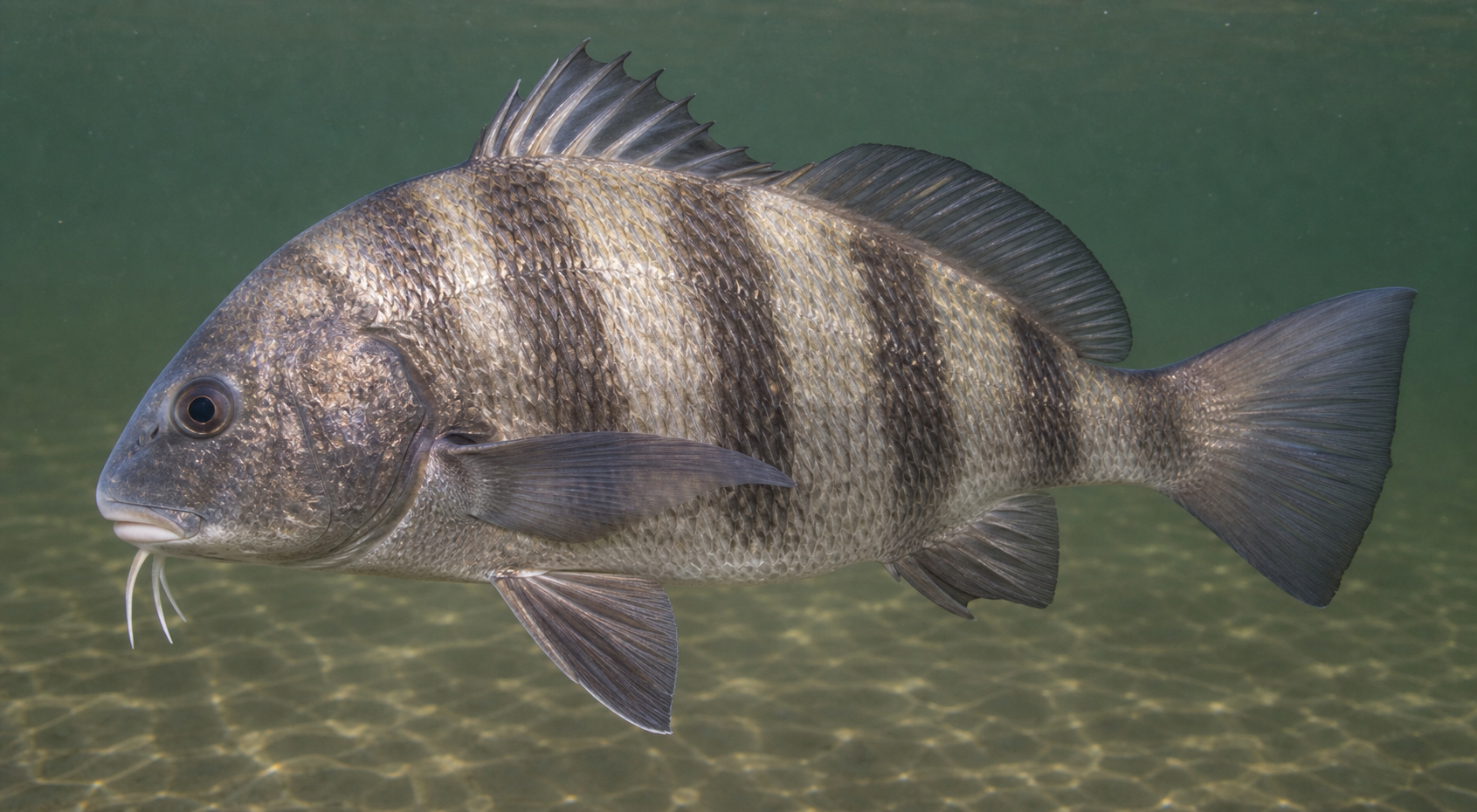
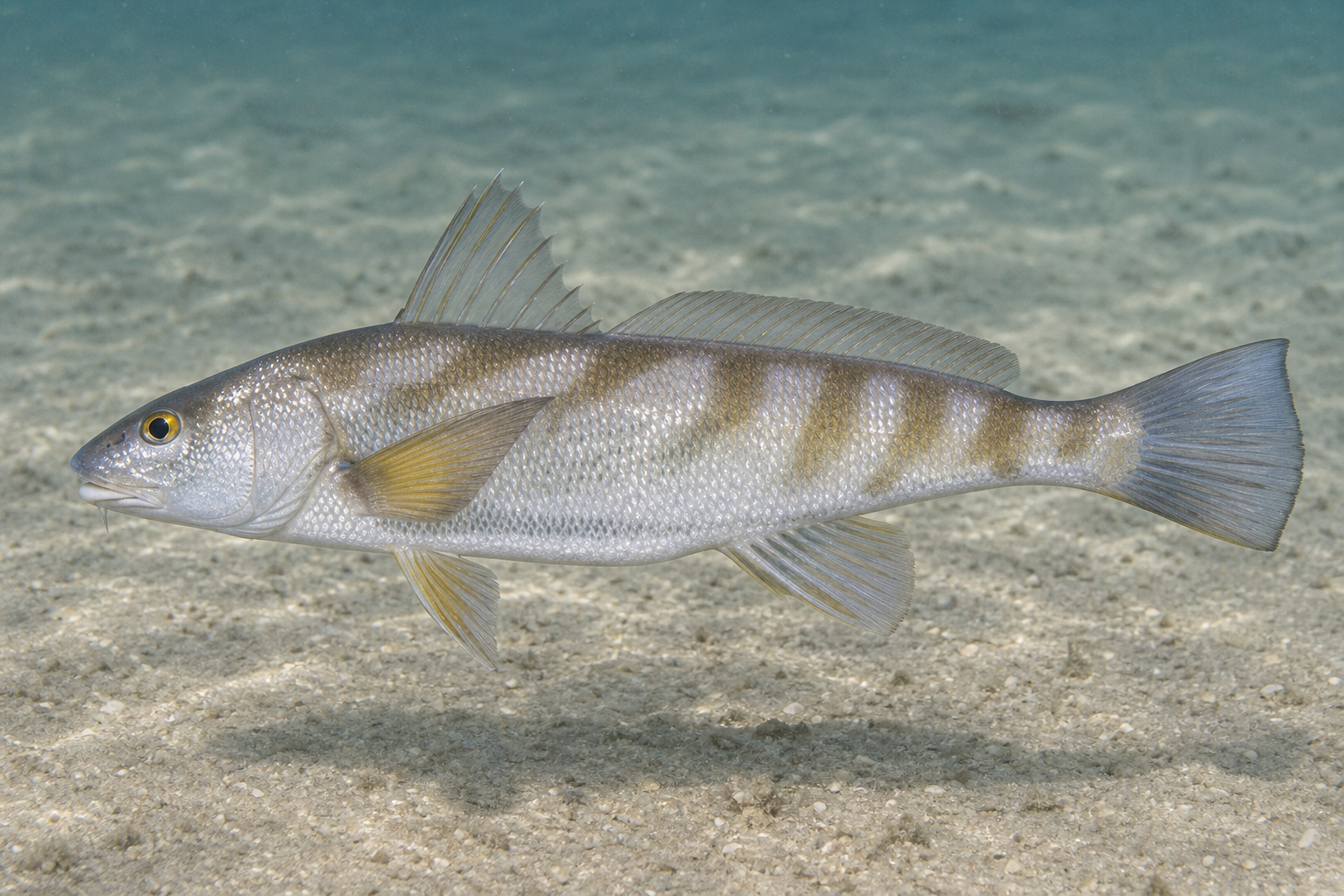
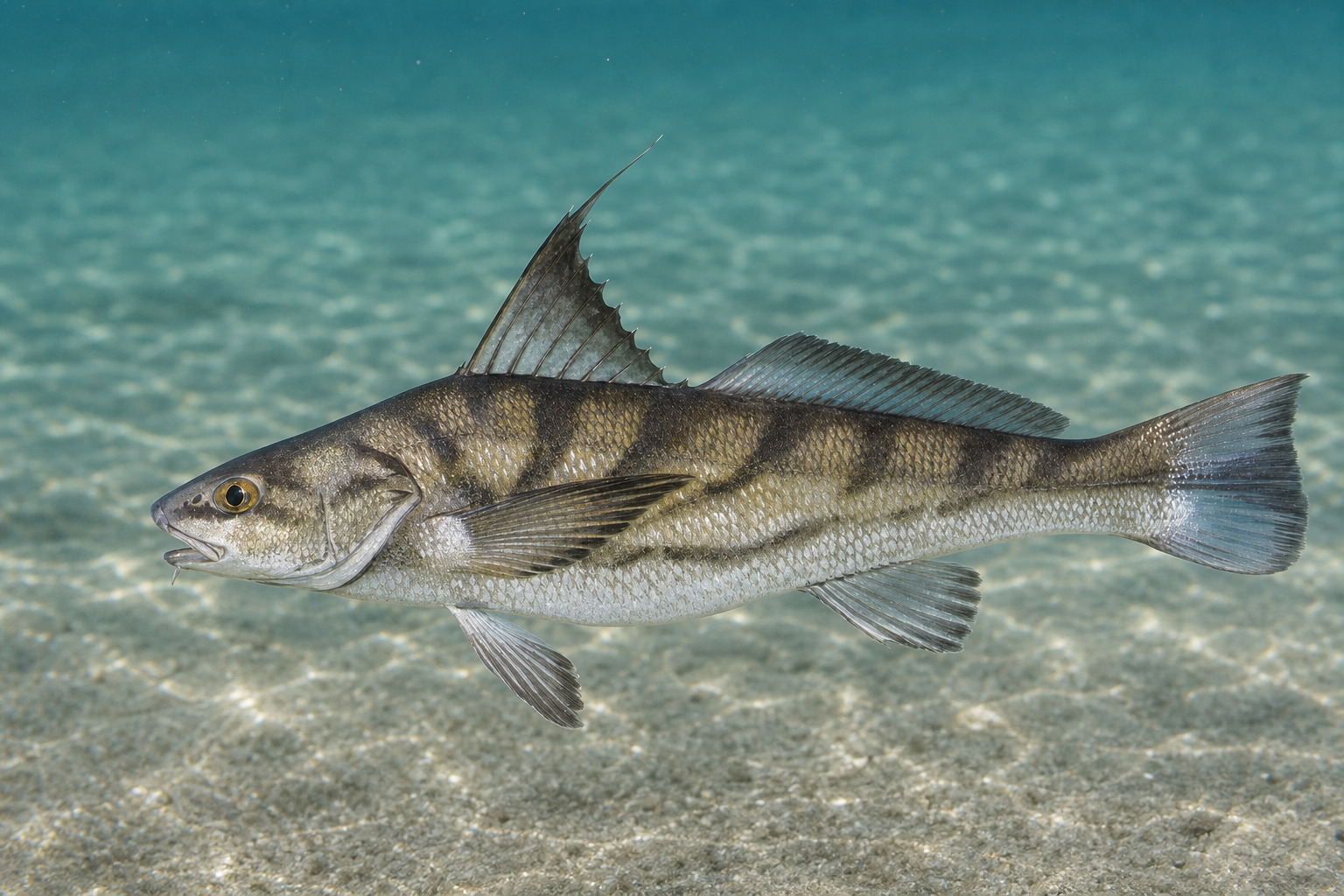
Black drum showing dark bars and chin barbels
Saltwater

Black drum

Pogonias cromis

Also called: Drum, puppy drum

Identify it: Deep silver-gray body, dark juvenile bars, high arched back, and several short barbels beneath the chin.

Season
Open year-round
Bag
5 per person daily; may include 1 over 24 inches
Size
14–24 inches total length
Check current FWC black drum rules
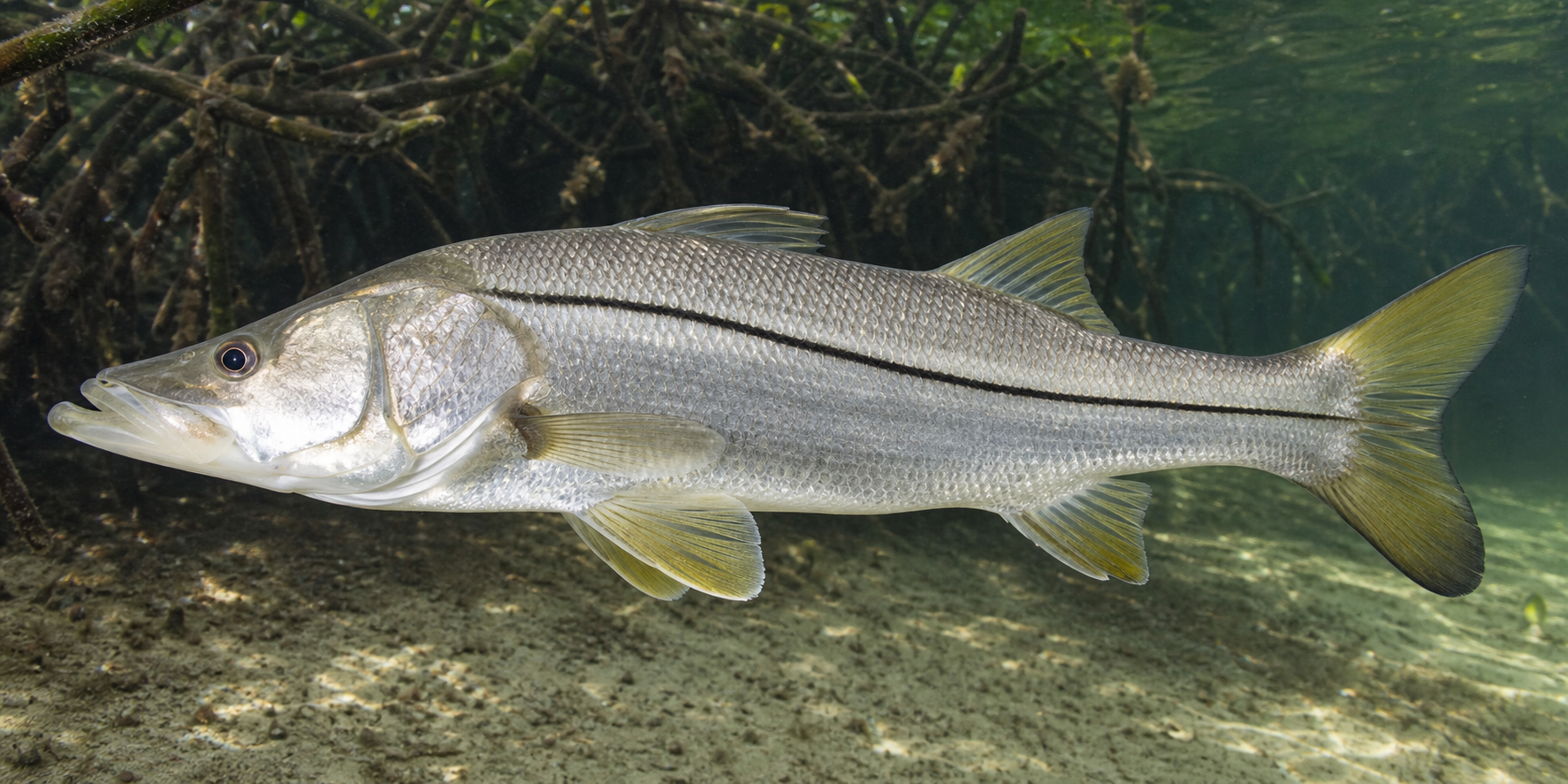
Common snook showing its bold black lateral line
Saltwater

Common snook

Centropomus undecimalis

Also called: Linesider, robalo

Identify it: Long silver body, yellowish fins, protruding lower jaw, and a sharply defined black lateral line.

Season
Northeast closed Dec. 15–Jan. 31 and June 1–Aug. 31
Bag
1 per person daily; snook permit required
Size
28–32 inches total length
Check current FWC Northeast snook rules
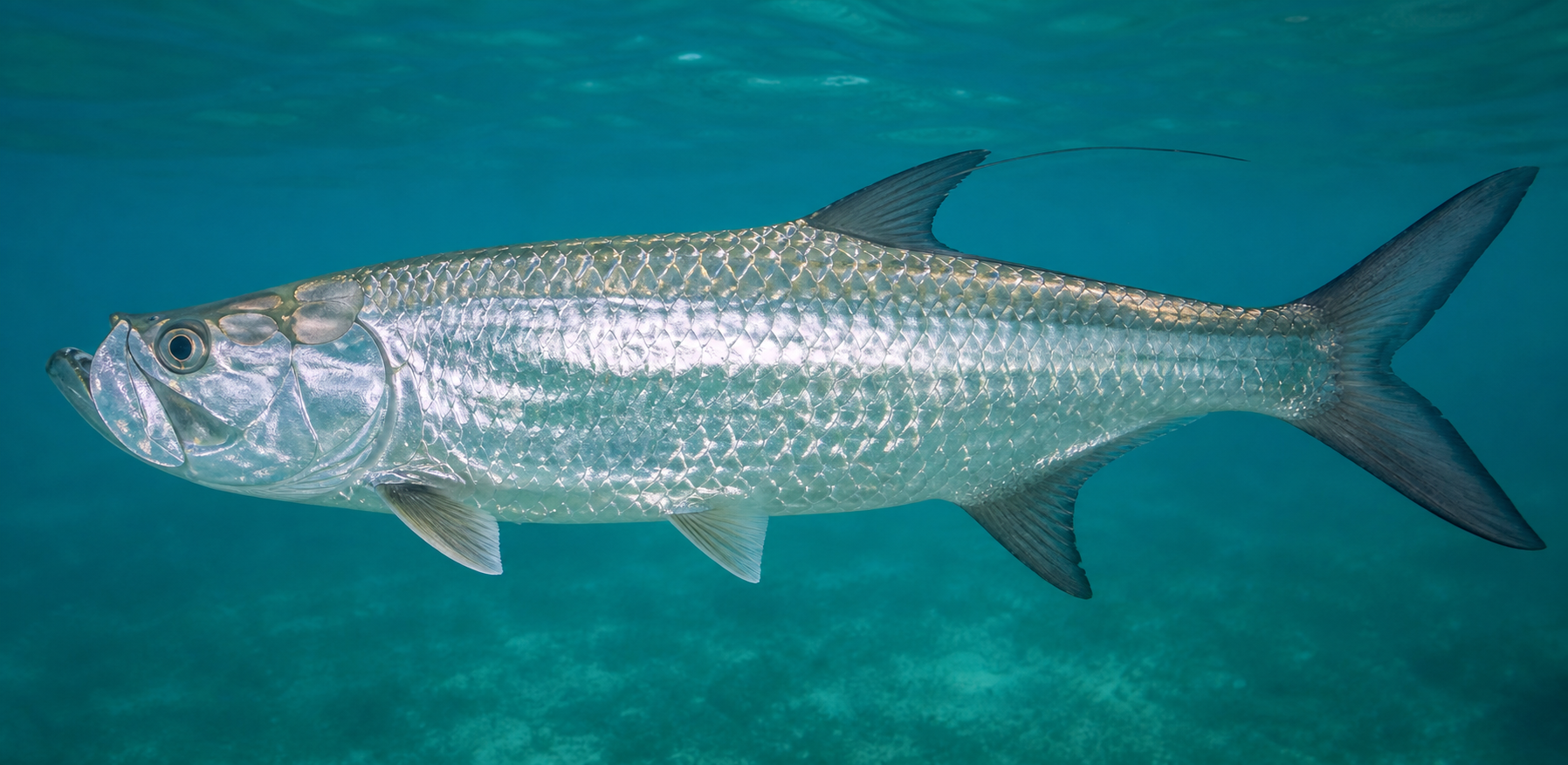
Atlantic tarpon showing large silver scales and trailing dorsal filament
Catch and release

Atlantic tarpon

Megalops atlanticus

Also called: Silver king

Identify it: Huge reflective scales, upturned mouth, deeply forked tail, and a long filament from the final dorsal ray.

Season
Catch and release year-round
Bag
No ordinary harvest; record-harvest tag exception only
Size
Fish over 40 inches must remain in the water
Check current FWC tarpon rules
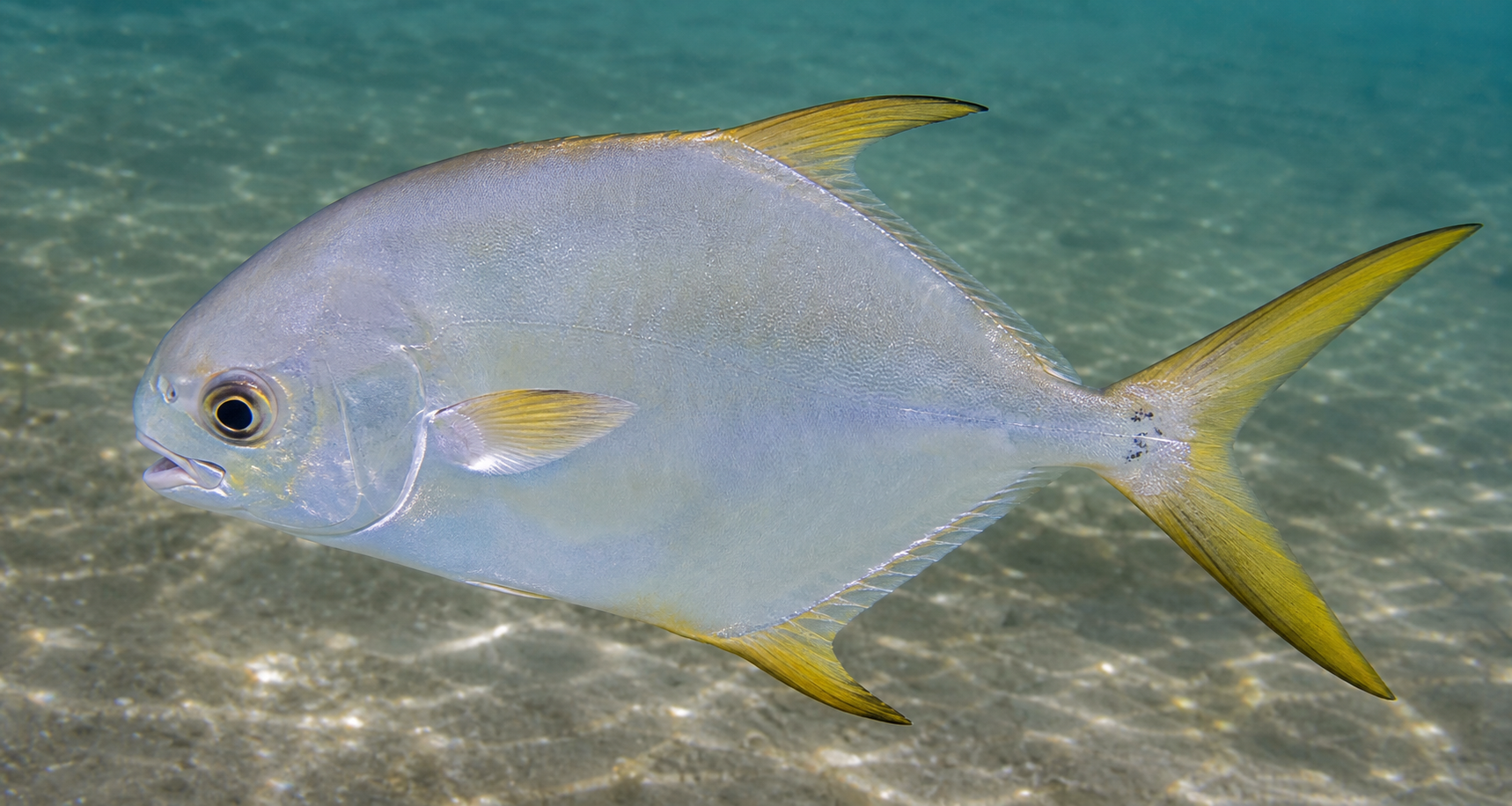
Florida pompano showing its bright silver body and yellow fins
Saltwater

Florida pompano

Trachinotus carolinus

Also called: Pompano

Identify it: Compact silver body, blunt rounded head, narrow tail base, and yellowish fins without dark body bars.

Season
Open year-round
Bag
6 per person daily
Size
11-inch minimum fork length
Check current FWC pompano rules
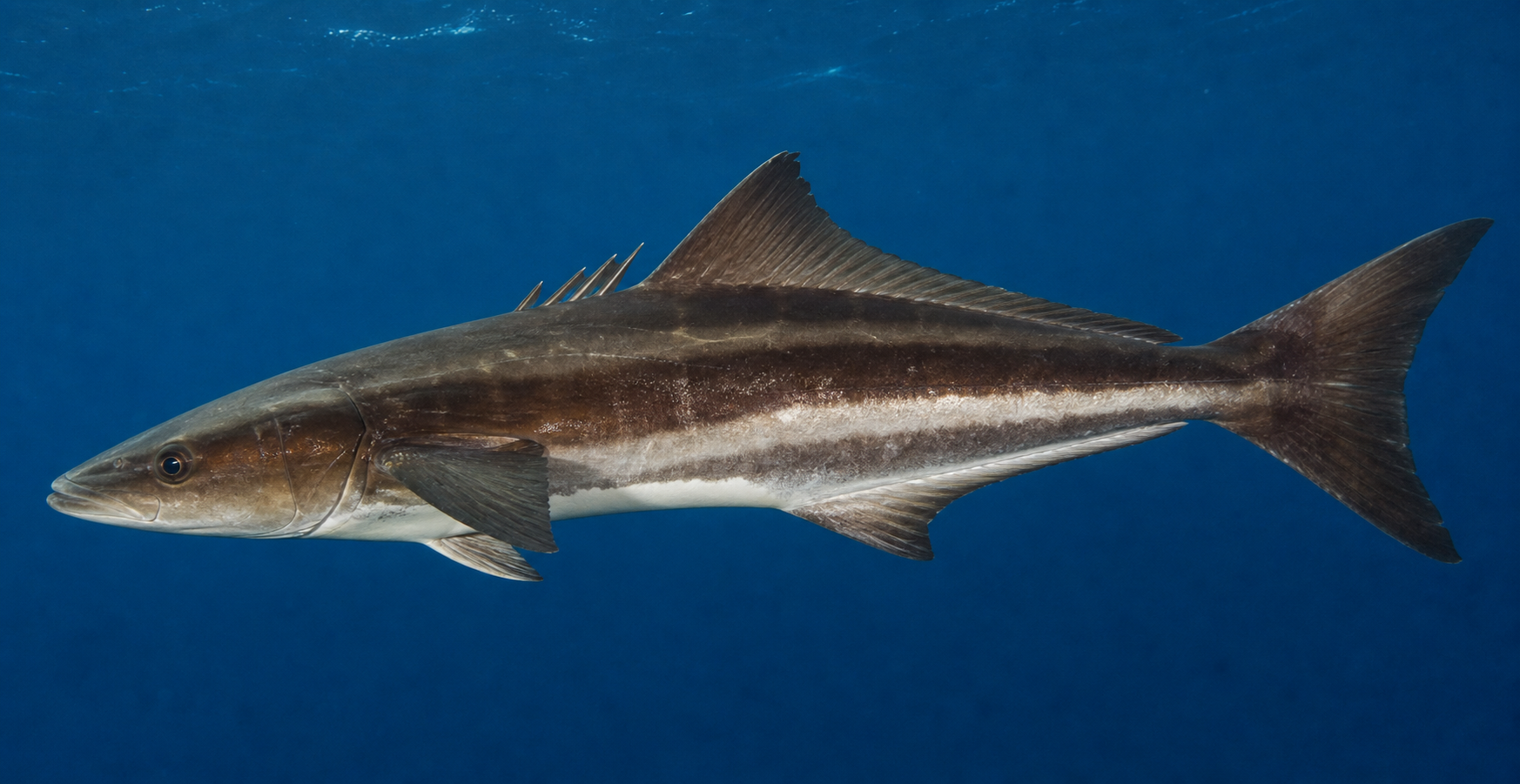
Cobia showing its broad head and pale horizontal side bands
Saltwater

Cobia

Rachycentron canadum

Also called: Ling, lemonfish

Identify it: Long dark-brown body, broad flattened head, pale side bands, and isolated short spines before the dorsal fin.

Season
Open year-round
Bag
1 per person or 2 per vessel, whichever is less
Size
36-inch minimum fork length
Check current FWC cobia rules
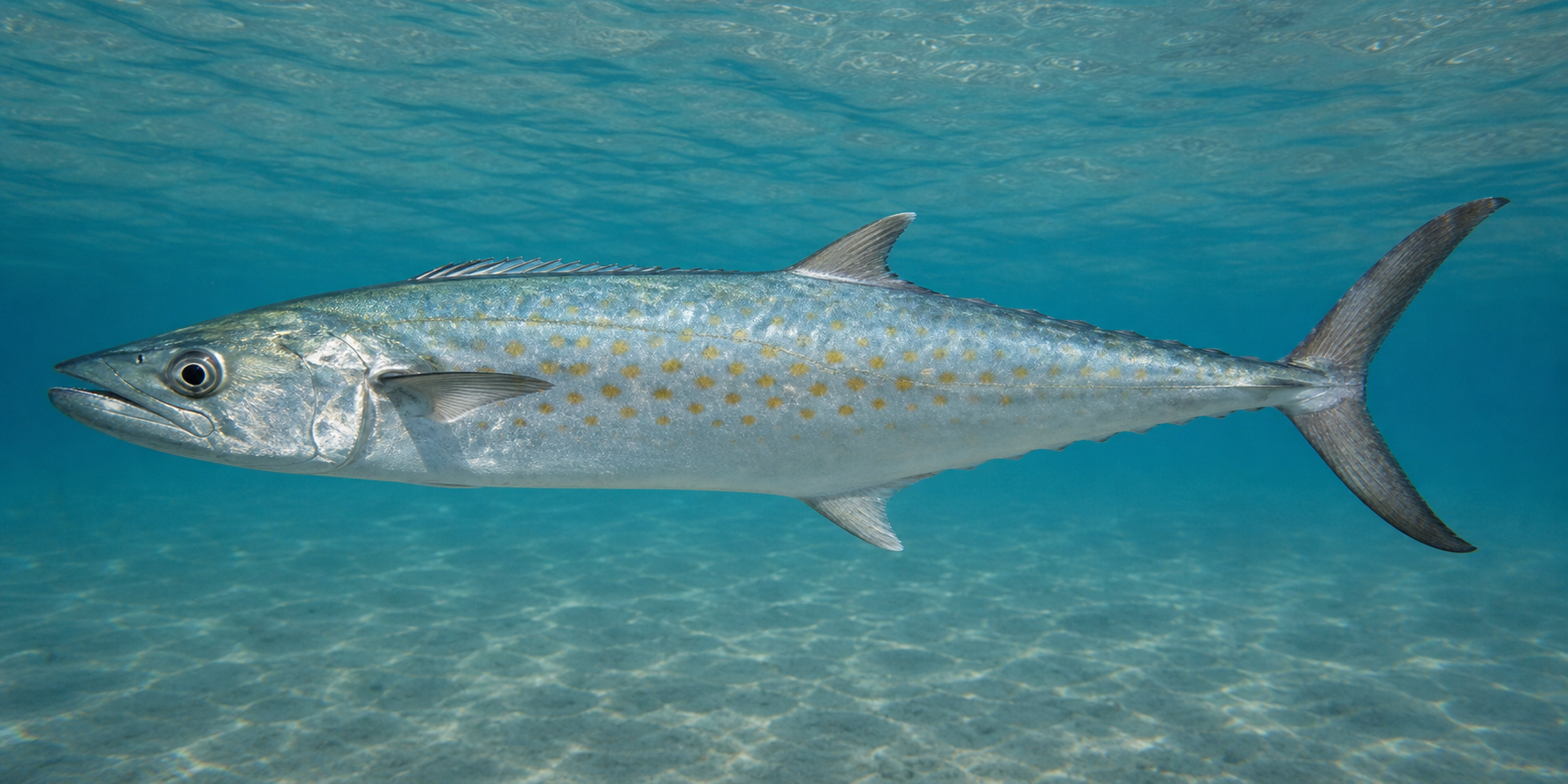
Spanish mackerel showing golden spots on a slender silver body
Saltwater

Spanish mackerel

Scomberomorus maculatus

Also called: Spanish

Identify it: Slender silver body with many yellow-gold spots, pointed snout, sharp teeth, and a deeply forked tail.

Season
Open year-round
Bag
15 per person daily
Size
12-inch minimum fork length
Check current FWC Spanish mackerel rules
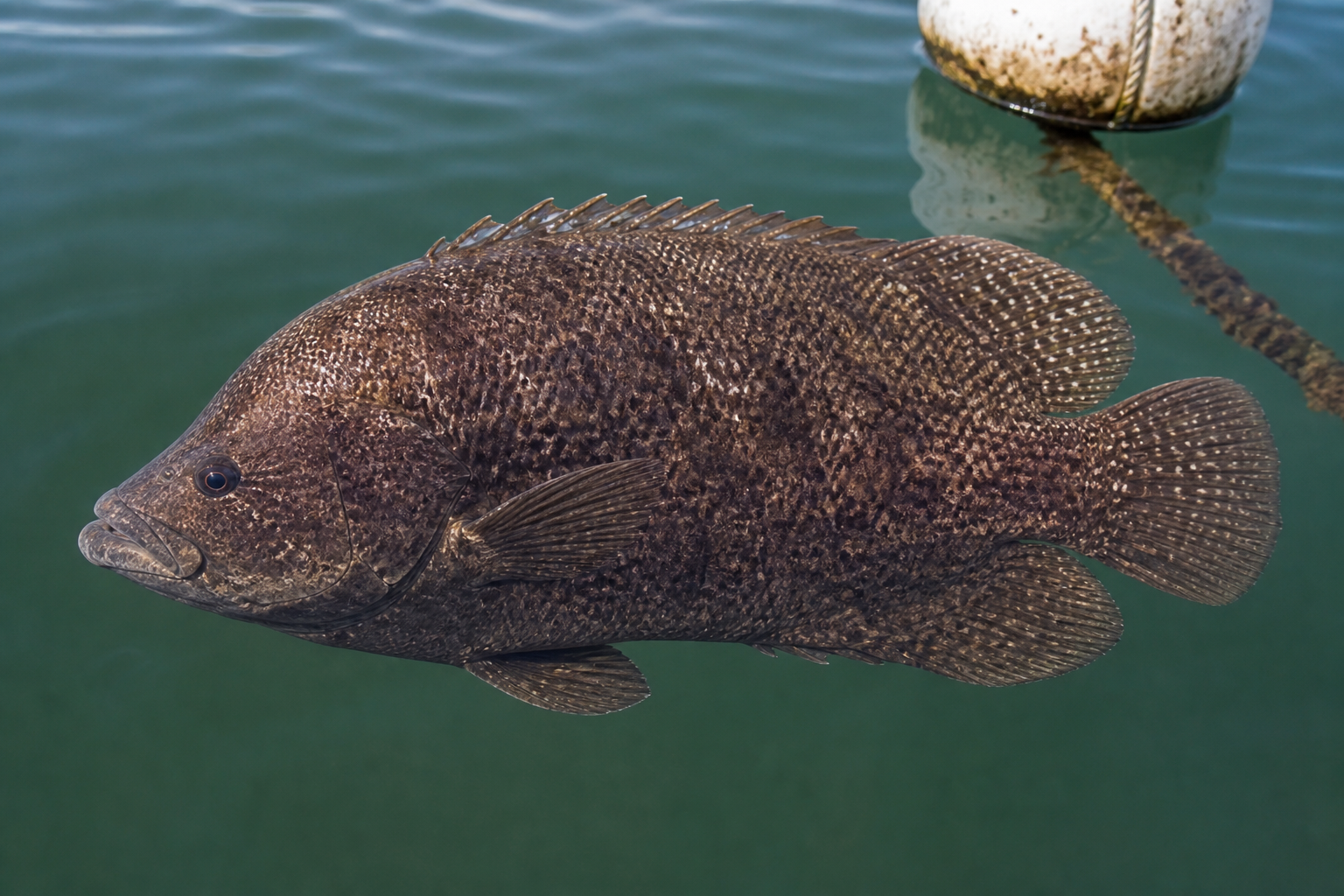
Tripletail showing rounded rear fins that resemble three tails
Saltwater

Tripletail

Lobotes surinamensis

Also called: Blackfish

Identify it: Deep mottled body with rounded dorsal and anal fins extending beside the tail, creating a three-tailed appearance.

Season
Open year-round
Bag
2 per person daily
Size
18-inch minimum total length
Check current FWC tripletail rules

Croakers, whiting and saltwater catfish

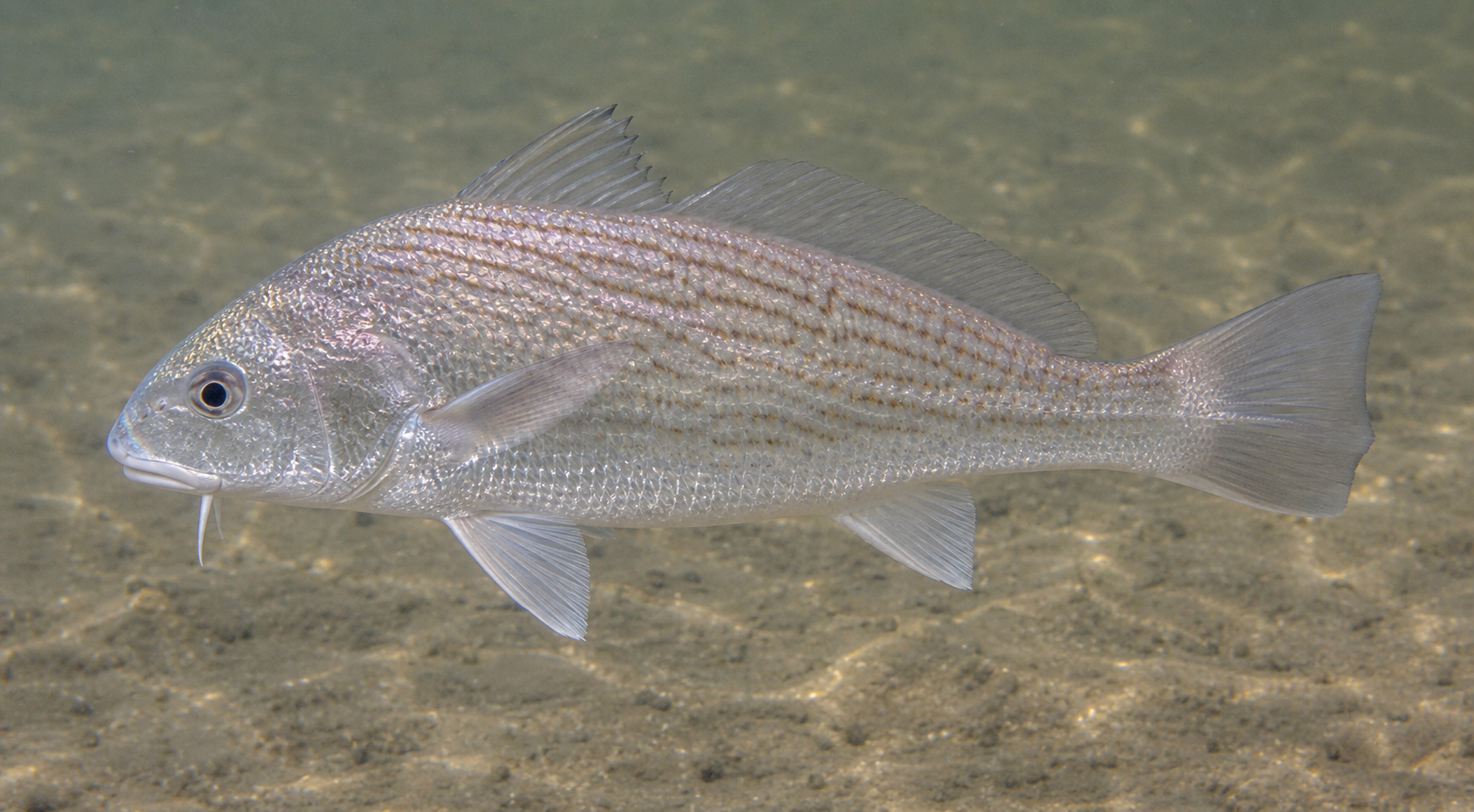
Atlantic croaker showing wavy diagonal lines and small chin barbels
Saltwater

Atlantic croaker

Micropogonias undulatus

Also called: Croaker, hardhead

Identify it: Silver-bronze body with wavy diagonal lines, a slightly arched back, small chin barbels, and a concave tail.

Season
Open year-round
Bag
50 per person daily in Atlantic state waters
Size
No minimum
Check current FWC croaker rules
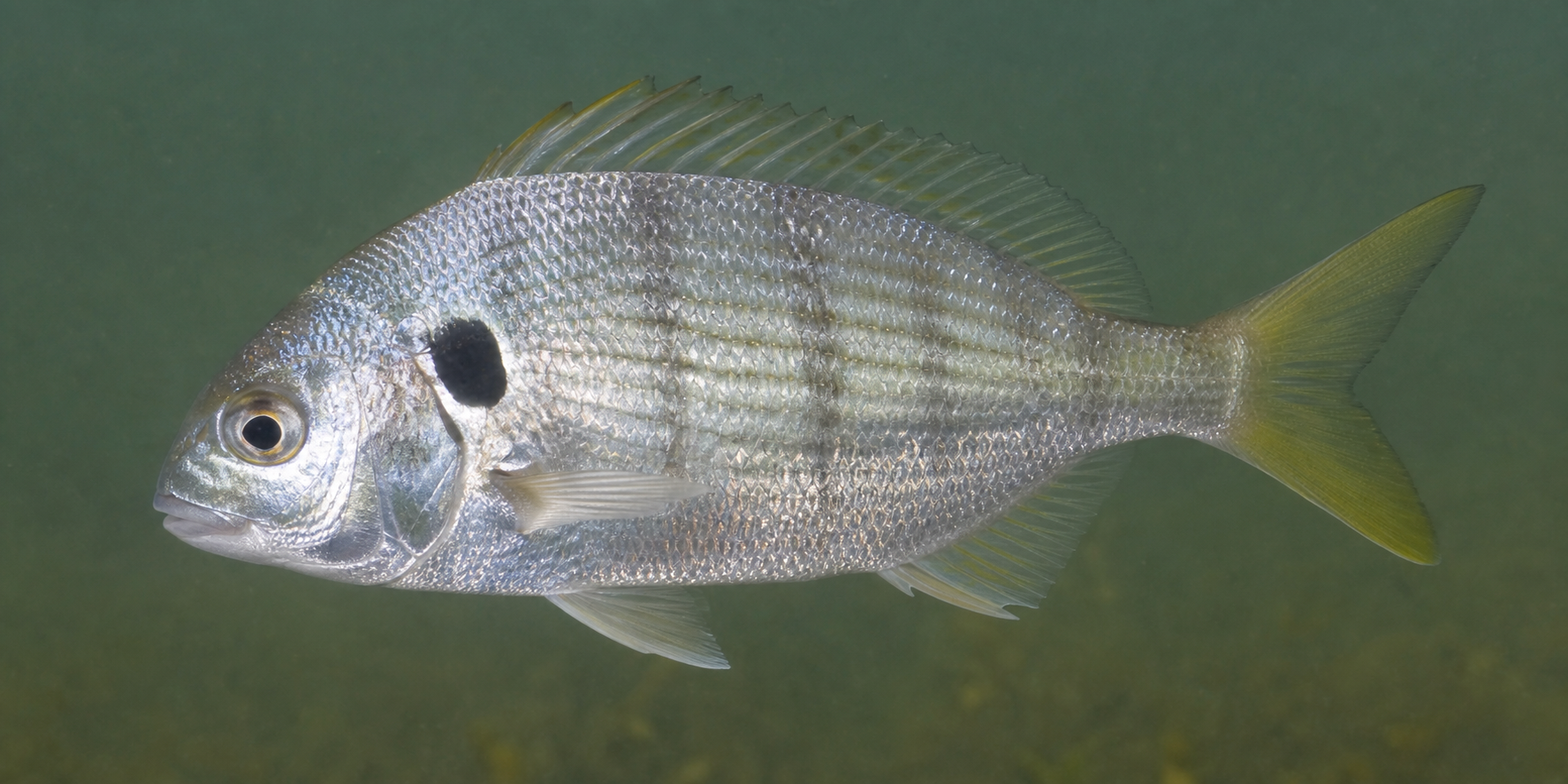
Spot fish showing its distinct black shoulder spot
Saltwater

Spot

Leiostomus xanthurus

Also called: Norfolk spot

Identify it: Small deep-bodied silver fish with a large round black spot behind the gill cover and faint diagonal bars.

Season
Open year-round
Bag
50 per person daily in Atlantic state waters
Size
No minimum
Check current FWC spot rules
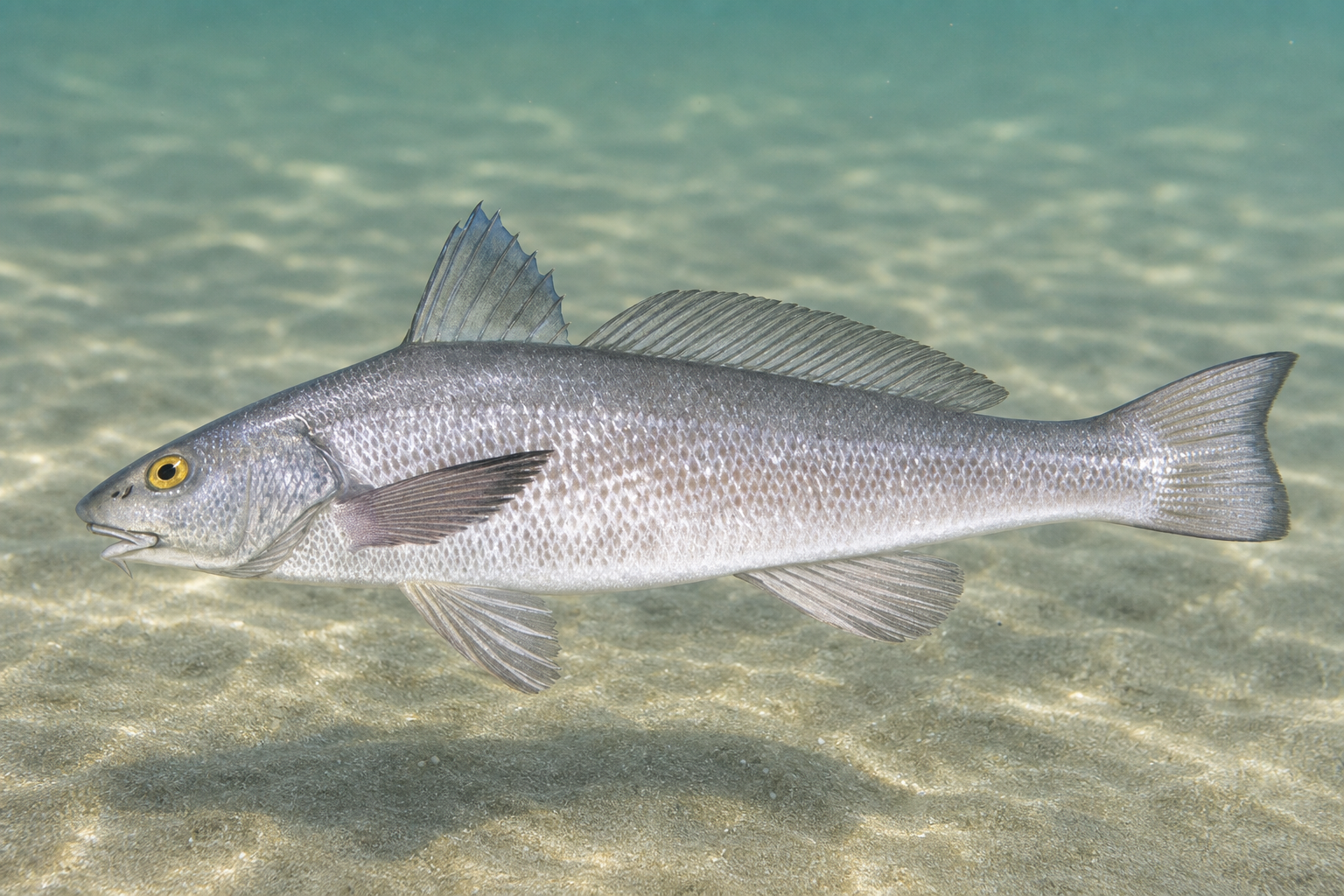
Southern kingfish whiting with faint diagonal blotches and a chin barbel
Saltwater — unregulated species

Southern kingfish

Menticirrhus americanus

Also called: Whiting, sea mullet

Identify it: Gray-brown back, seven or eight faint diagonal blotches, and one lower-jaw barbel; no distinct shoulder “V.”

Season
No species-specific closure
Bag
Default: 2 fish or 100 lb daily, whichever is more
Size
No species-specific minimum
Check current FWC unregulated-species rules
Northern kingfish whiting showing a V-shaped shoulder marking
Saltwater — unregulated species

Northern kingfish

Menticirrhus saxatilis

Also called: Whiting, sea mullet

Identify it: Bold dark body bars form a distinct “V” above the pectoral fin; the first dorsal fin is elongated and dark-tipped.

Season
No species-specific closure
Bag
Default: 2 fish or 100 lb daily, whichever is more
Size
No species-specific minimum
Check current FWC unregulated-species rules
Gulf kingfish whiting showing a clean silver body, chin barbel, and short first dorsal fin
Saltwater — unregulated species

Gulf kingfish

Menticirrhus littoralis

Also called: Whiting, Gulf whiting, sea mullet

Identify it: Slender silver body with a darker gray back, clean unbarred sides, one chin barbel, and a shorter first dorsal fin than the Northern kingfish.

Season
No species-specific closure
Bag
Default: 2 fish or 100 lb per person daily, whichever is more
Size
No species-specific minimum
Check current FWC unregulated-species rules
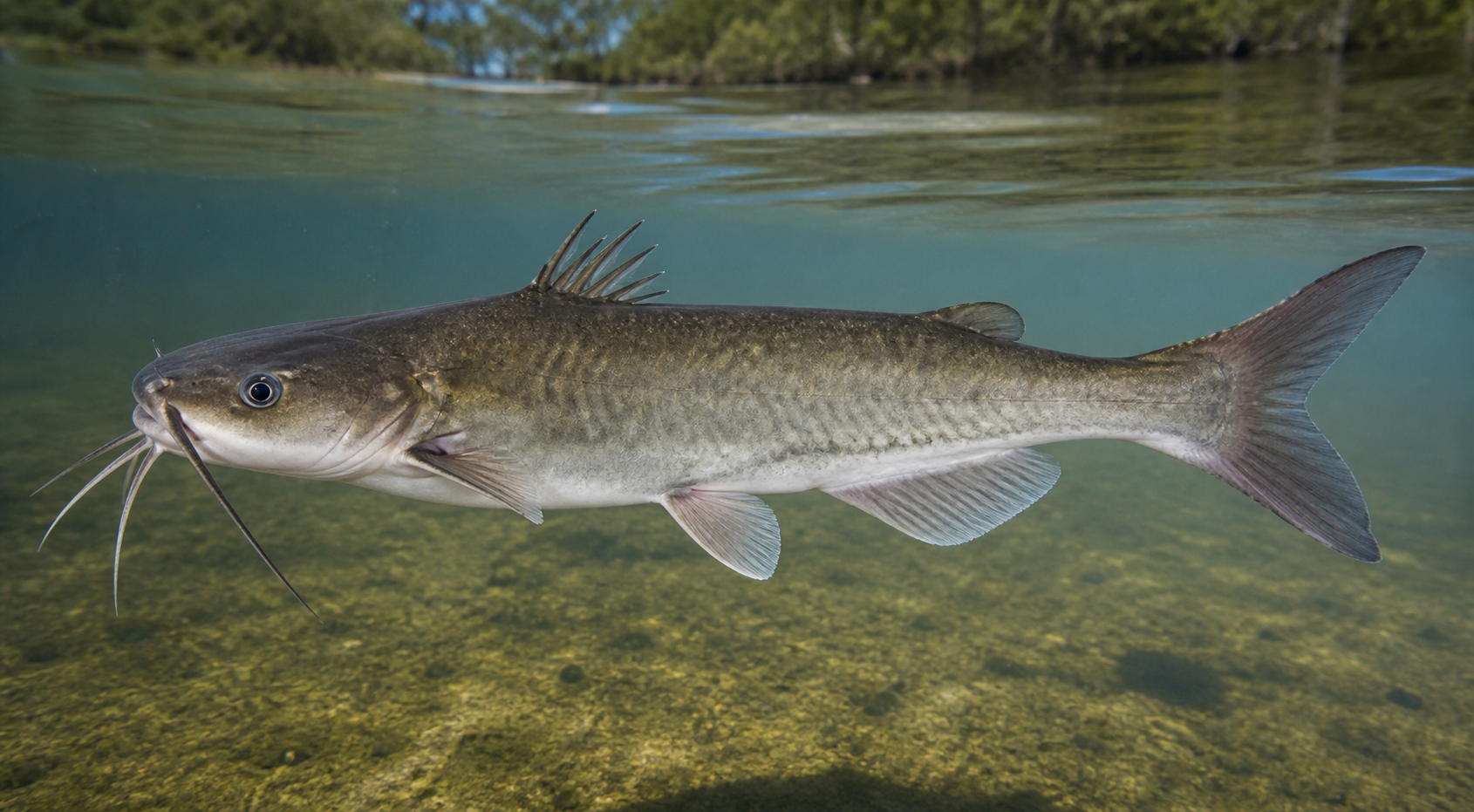
Hardhead catfish showing four chin barbels and short fin spines
Saltwater — unregulated species

Hardhead catfish

Ariopsis felis

Also called: Sea catfish, hardhead

Identify it: Brown-gray back, four chin barbels, and three sharp fin spines without long fleshy filaments.

Handling warning: The dorsal and pectoral spines can cause painful punctures.

Season
No species-specific closure
Bag
Default: 2 fish or 100 lb daily, whichever is more
Size
No species-specific minimum
Check current FWC unregulated-species rules
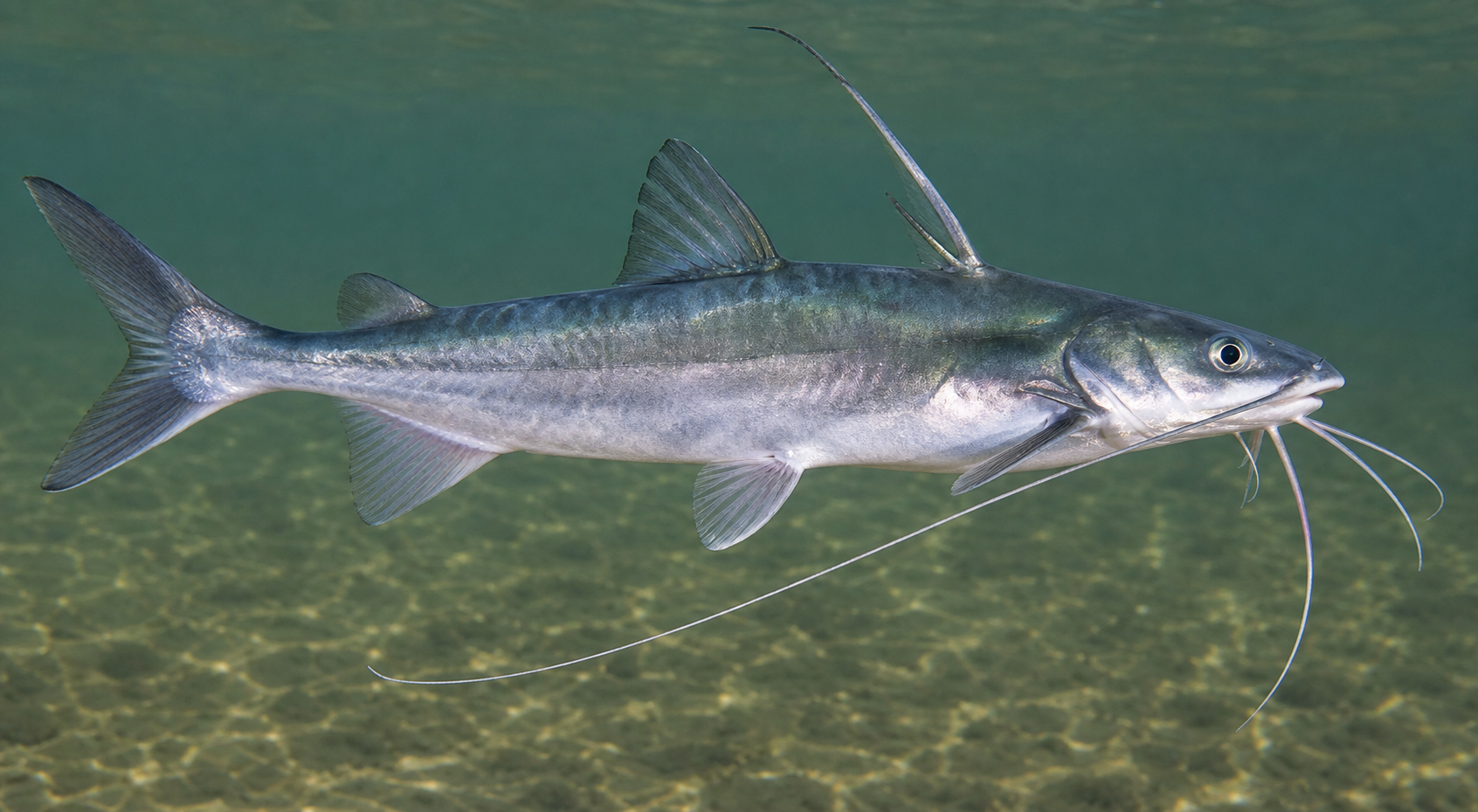
Gafftopsail catfish showing long fleshy fin-spine filaments
Saltwater — unregulated species

Gafftopsail catfish

Bagre marinus

Also called: Sail cat, gafftop

Identify it: Blue-green back, two chin barbels, very long flattened mouth barbels, and long fleshy streamers from the fin spines.

Handling warning: The dorsal and pectoral spines can cause painful punctures.

Season
No species-specific closure
Bag
Default: 2 fish or 100 lb daily, whichever is more
Size
No species-specific minimum
Check current FWC unregulated-species rules

Additional coastal and reef species

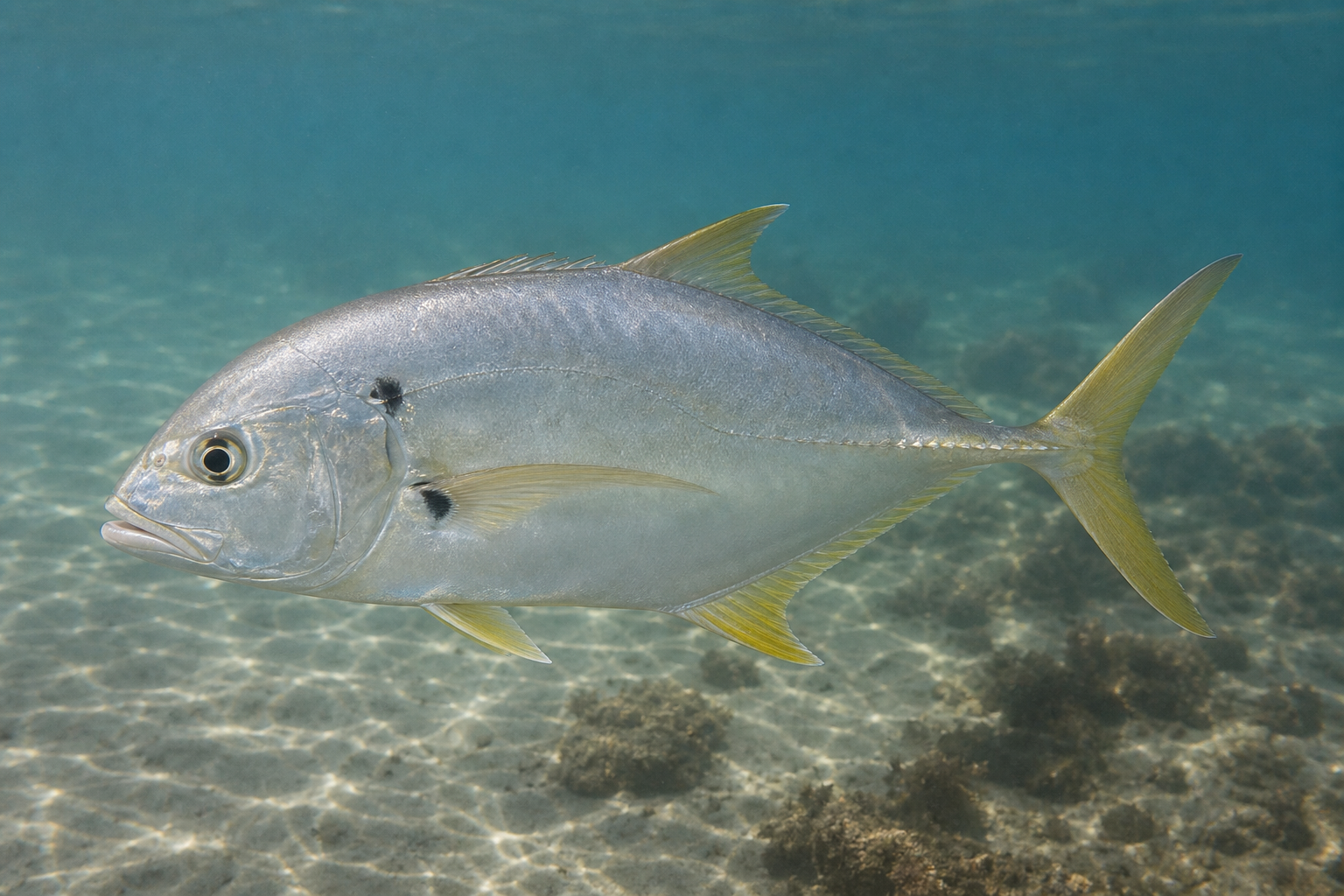
Jack crevalle showing a deep silver body, black gill spot, and forked yellow tail
Saltwater — unregulated species

Jack crevalle

Caranx hippos

Also called: Crevalle jack, common jack

Identify it: Deep silver body, steep forehead, black spot on the gill cover and near the pectoral-fin base, yellowish fins, and a sharply forked tail.

Season
No species-specific closure
Bag
Default: 2 fish or 100 lb per person daily, whichever is more
Size
No species-specific minimum
Check current FWC unregulated-species rules
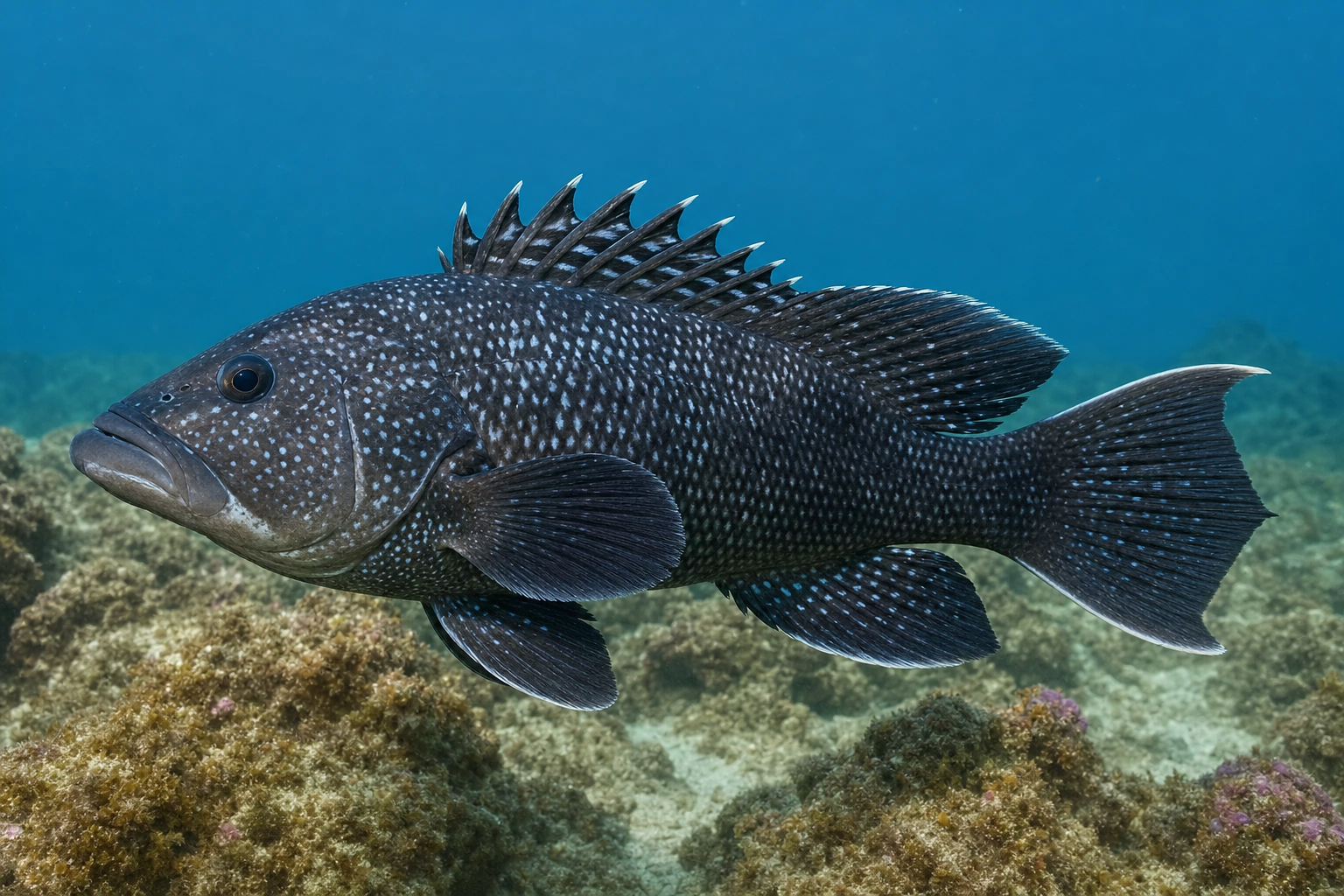
Black sea bass showing a stout dark body, pale flecks, and a long spiny dorsal fin
Atlantic saltwater

Black sea bass

Centropristis striata

Also called: Blackfish, sea bass

Identify it: Stout dark mottled body with blue-white flecks, a long spiny dorsal fin, and an elongated upper tail lobe on many adult males.

Season
No state seasonal closure listed
Bag
7 per person daily in Atlantic waters
Size
13-inch minimum total length
Check current FWC black sea bass rules
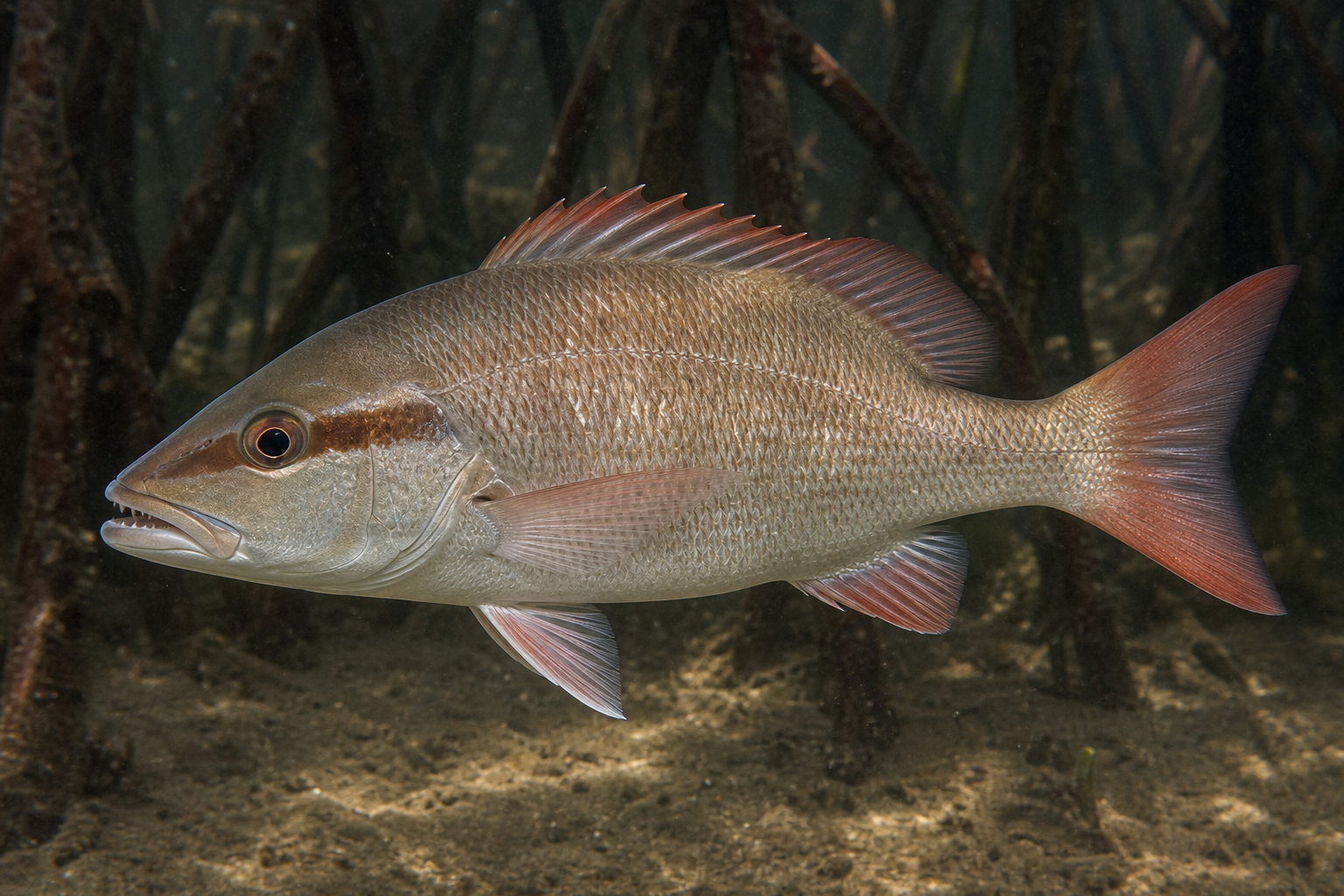
Mangrove snapper showing an olive-gray body, eye stripe, reddish fins, and canine teeth
Atlantic saltwater

Mangrove snapper

Lutjanus griseus

Also called: Gray snapper

Identify it: Gray-olive body, dark stripe through the eye, reddish fins, pointed snout, and prominent canine teeth.

Season
Open year-round
Bag
State: 5 per person within the 10-snapper aggregate; federal: 10 within the aggregate
Size
State: 10-inch minimum total length; federal: 12 inches
Check current FWC snapper rules

Sharks

Release any shark you cannot positively identify. Many Florida sharks—including hammerheads, lemon, tiger, sandbar, sand tiger, makos, whale and white sharks—are prohibited from harvest. Prohibited sharks must remain in the water and be released without delay.
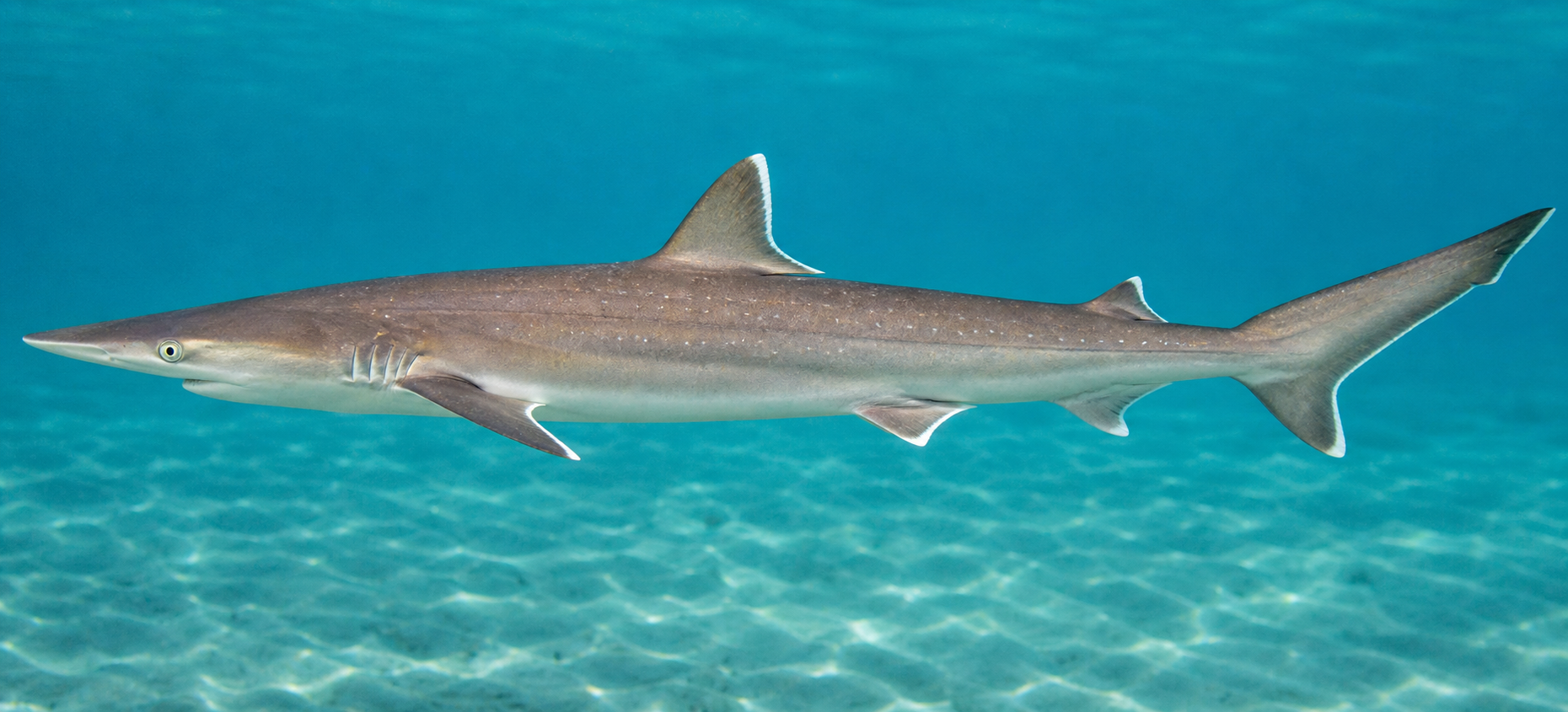
Atlantic sharpnose shark with a pointed snout and small pale side spots
Harvestable shark — Group 1

Atlantic sharpnose shark

Rhizoprionodon terraenovae

Identify it: Small slender shark with a long pointed snout, small white side spots, and white-edged fins.

Season
Open year-round in state waters
Bag
1 shark per person; 2 sharks per vessel total
Size
No state minimum for Group 1
Check current FWC shark rules
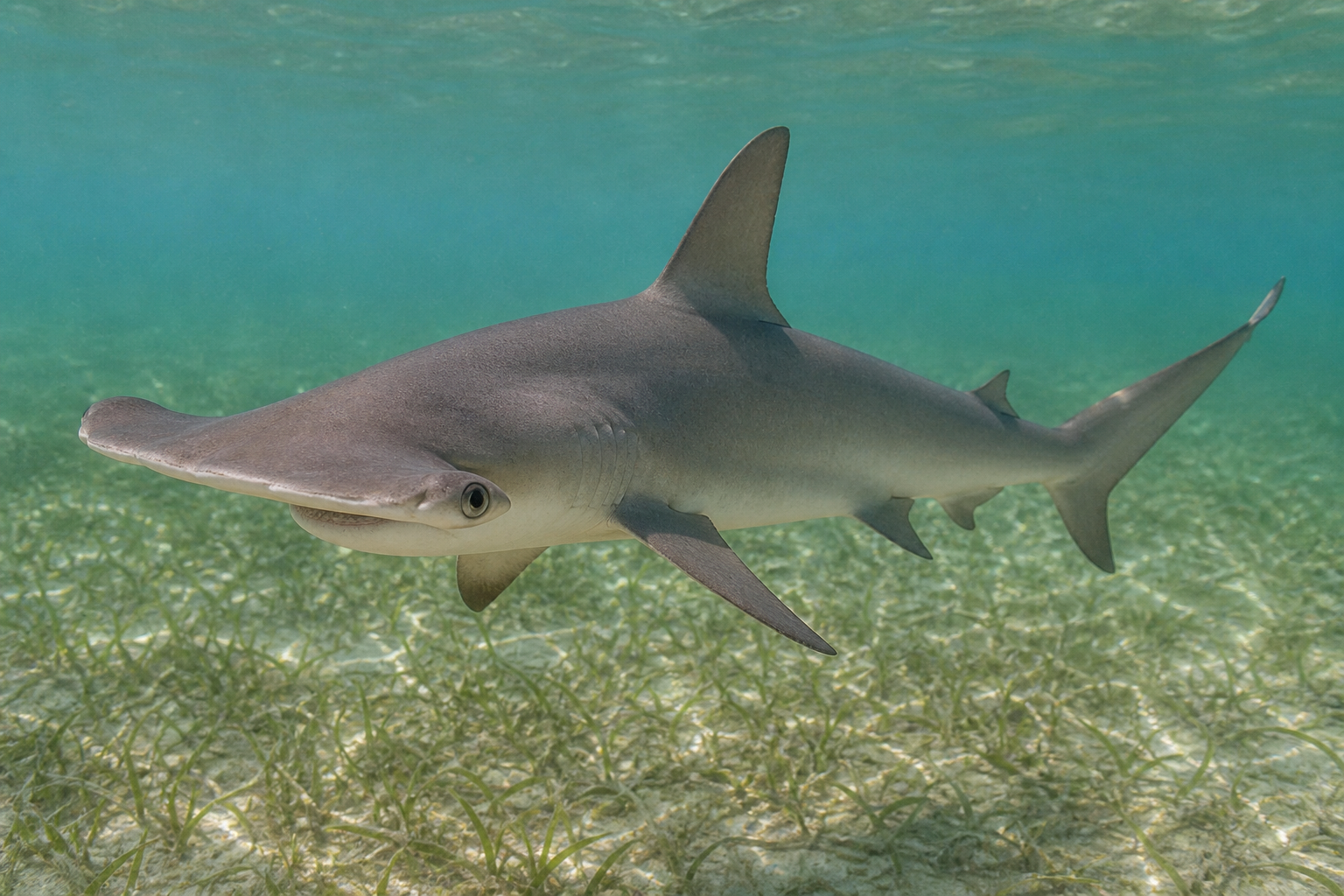
Bonnethead shark showing its smooth shovel-shaped head
Harvestable shark — Group 1

Bonnethead shark

Sphyrna tiburo

Also called: Shovelhead

Identify it: Small gray shark with a smooth, rounded shovel-shaped head lacking the deep notch of larger hammerheads.

Season
Open year-round in state waters
Bag
1 shark per person; 2 sharks per vessel total
Size
No state minimum for Group 1
Check current FWC shark rules

Rays and skates

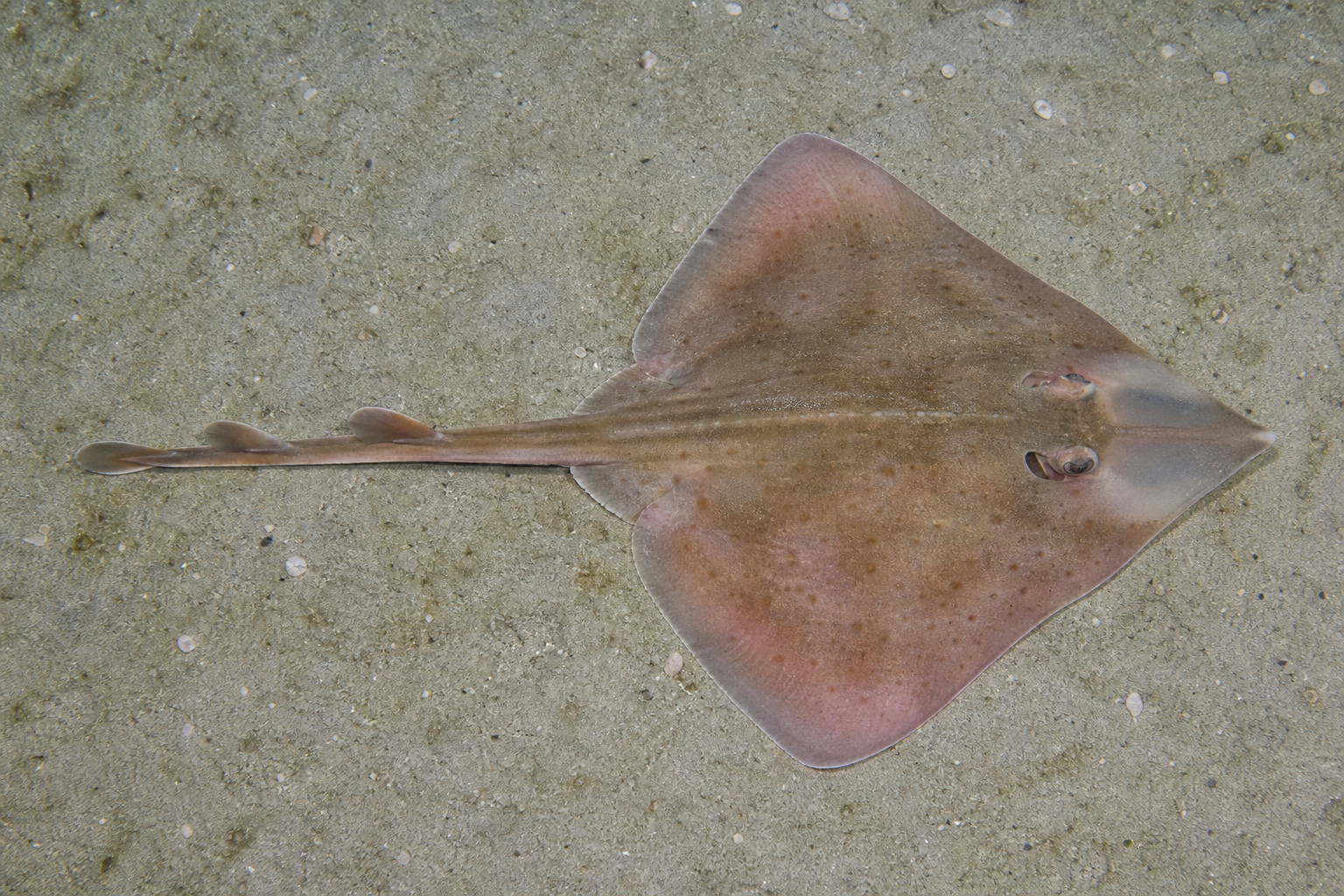
Clearnose skate with translucent patches beside its pointed snout
Saltwater — unregulated species

Clearnose skate

Rostroraja eglanteria

Identify it: Diamond-shaped disc with translucent patches on both sides of the pointed snout and a thick tail with small dorsal fins.

Season
No species-specific closure
Bag
Default: 2 fish or 100 lb per person daily, whichever is more
Size
No species-specific state minimum
Check current FWC unregulated-species rules
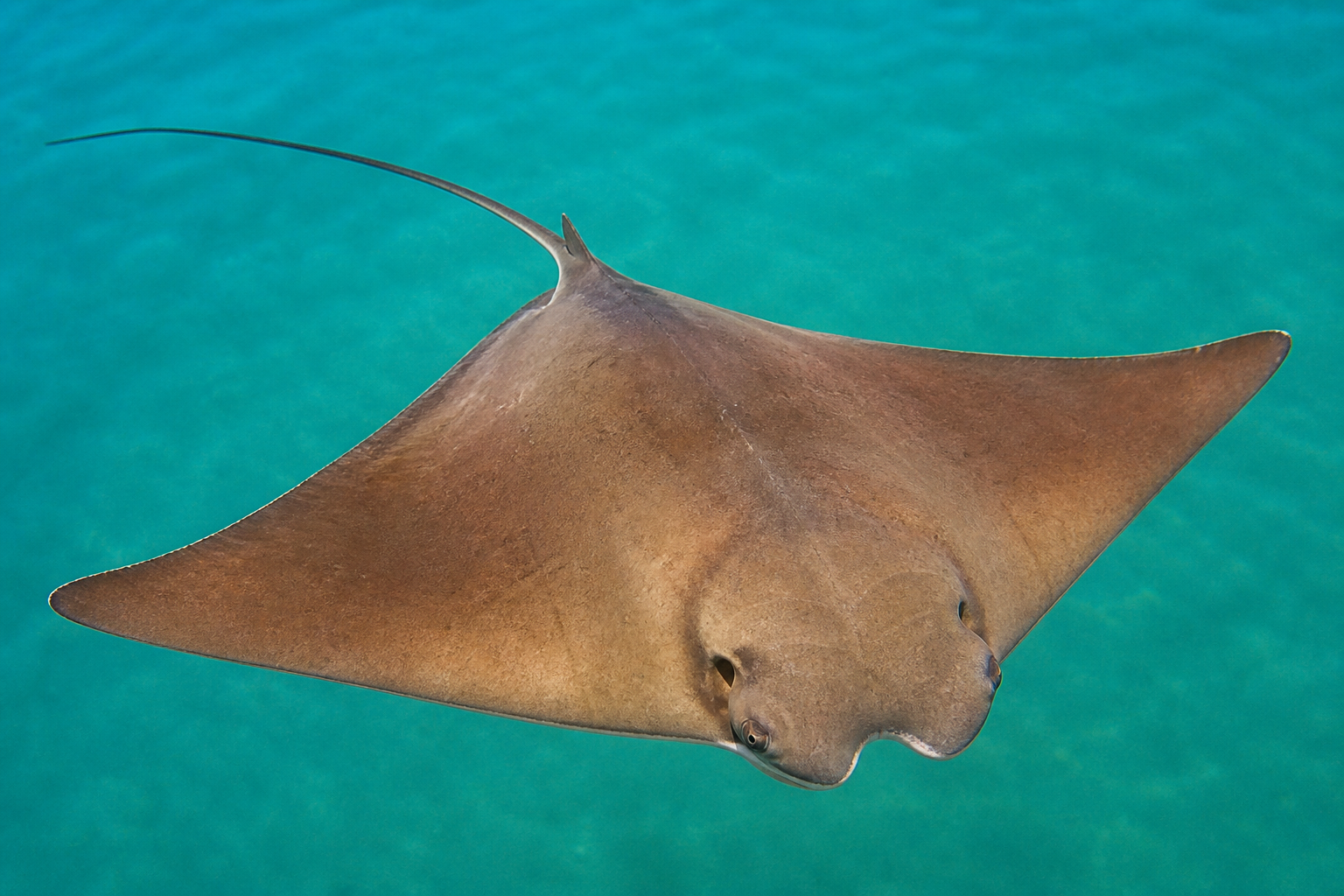
Cownose ray showing a notched forehead and broad pointed wings
Saltwater — unregulated species

Cownose ray

Rhinoptera bonasus

Identify it: Broad pointed wings, brown upper surface, long whip-like tail, and a deeply notched forehead with two rounded lobes.

Season
No species-specific closure
Bag
Default: 2 fish or 100 lb per person daily, whichever is more
Size
No species-specific state minimum
Check current FWC ray rules

Freshwater species

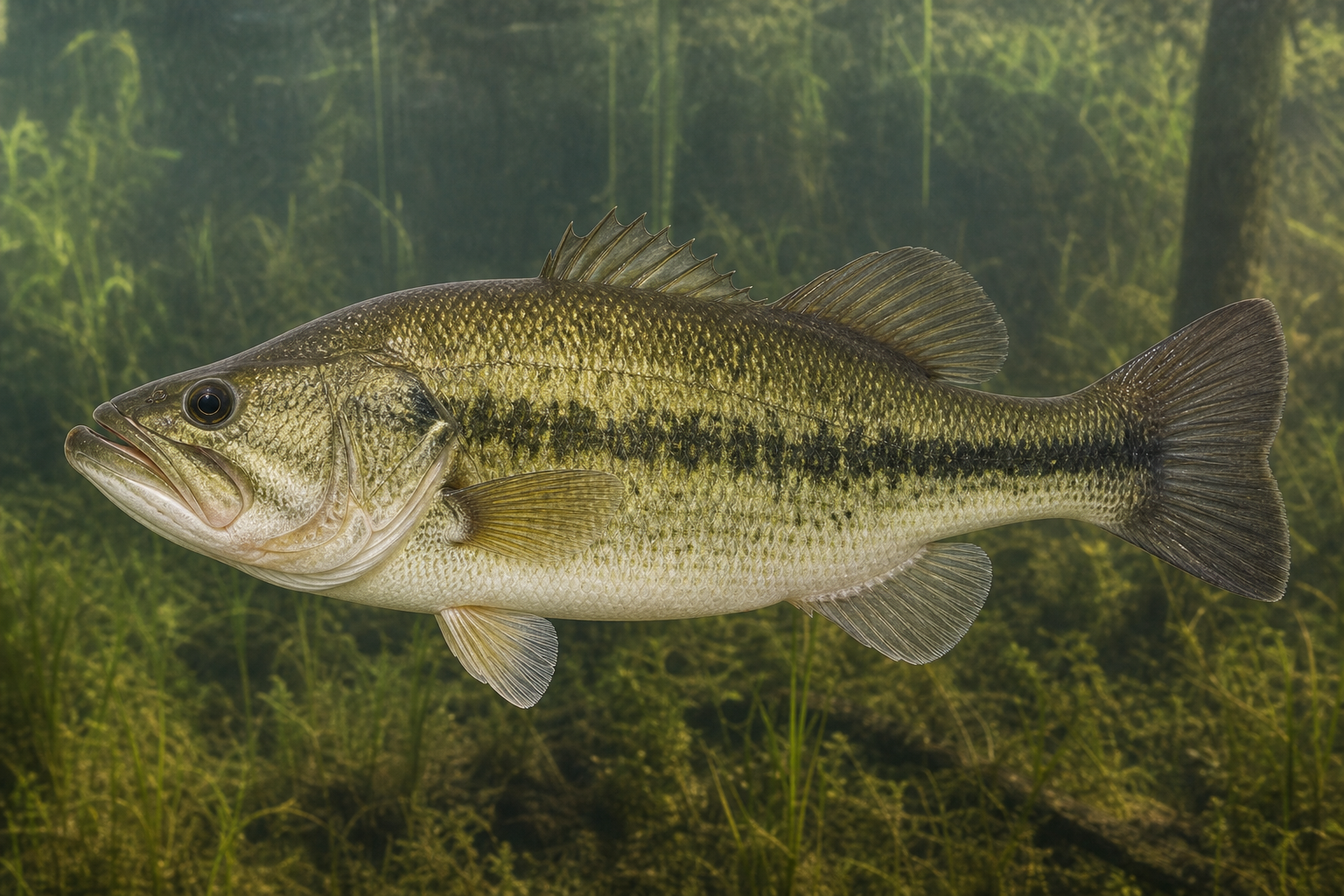
Florida bass showing a green body and dark horizontal side stripe
Freshwater

Florida bass / largemouth bass

Micropterus salmoides complex

Also called: Largemouth, black bass

Identify it: Large mouth extending behind the eye, green back, pale belly, and a broken dark stripe along each side.

Season
Open year-round unless special-water rules differ
Bag
5 black bass combined daily; only 1 may be 16 inches or longer
Size
No statewide minimum
Check current FWC freshwater rules
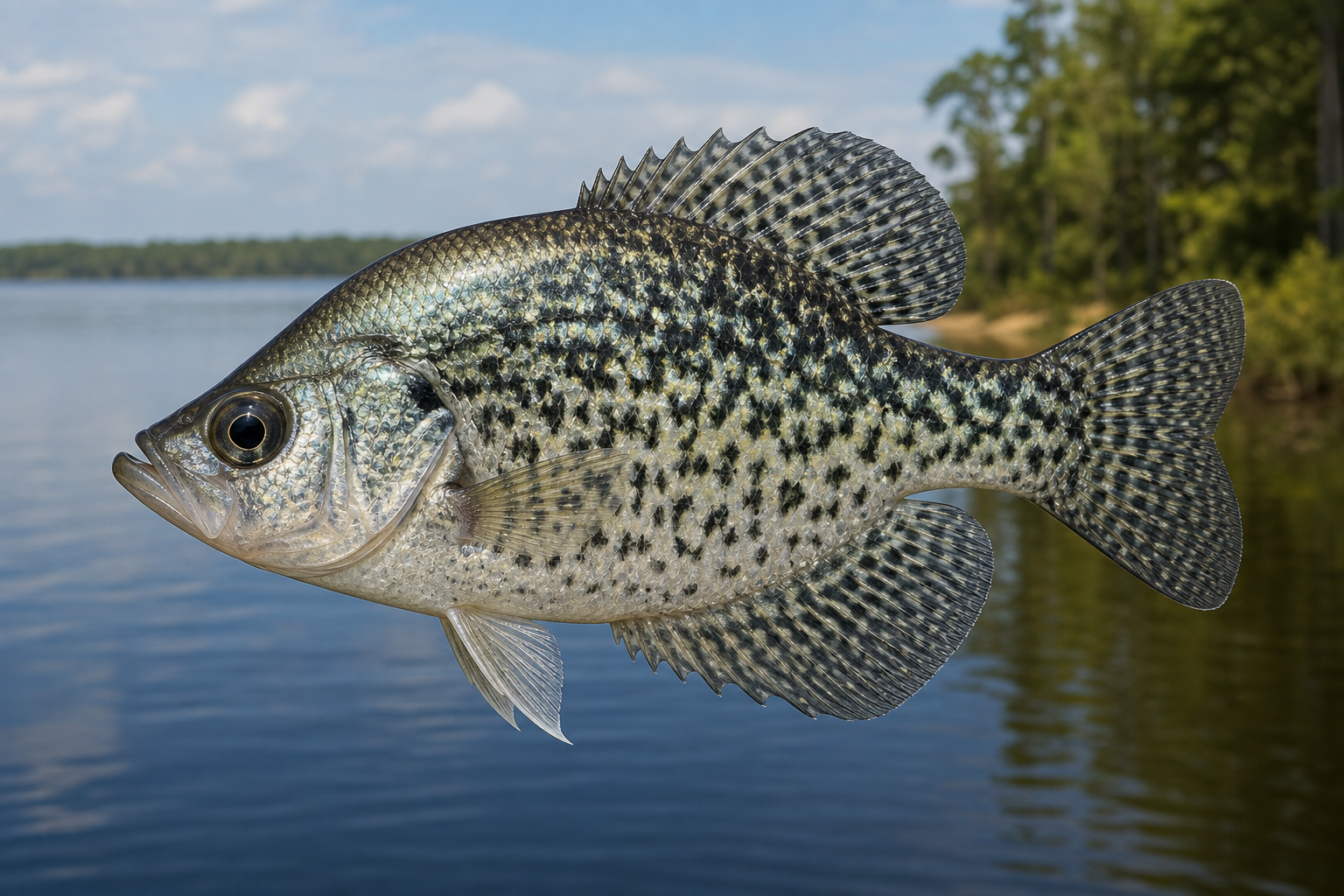
Black crappie showing its compressed body and irregular dark speckles
Freshwater

Black crappie

Pomoxis nigromaculatus

Also called: Speckled perch, speck

Identify it: Deep, compressed silver-green body covered with irregular dark speckles and seven or eight dorsal spines.

Season
Open year-round unless special-water rules differ
Bag
25 per person daily
Size
No statewide minimum
Check current FWC freshwater rules
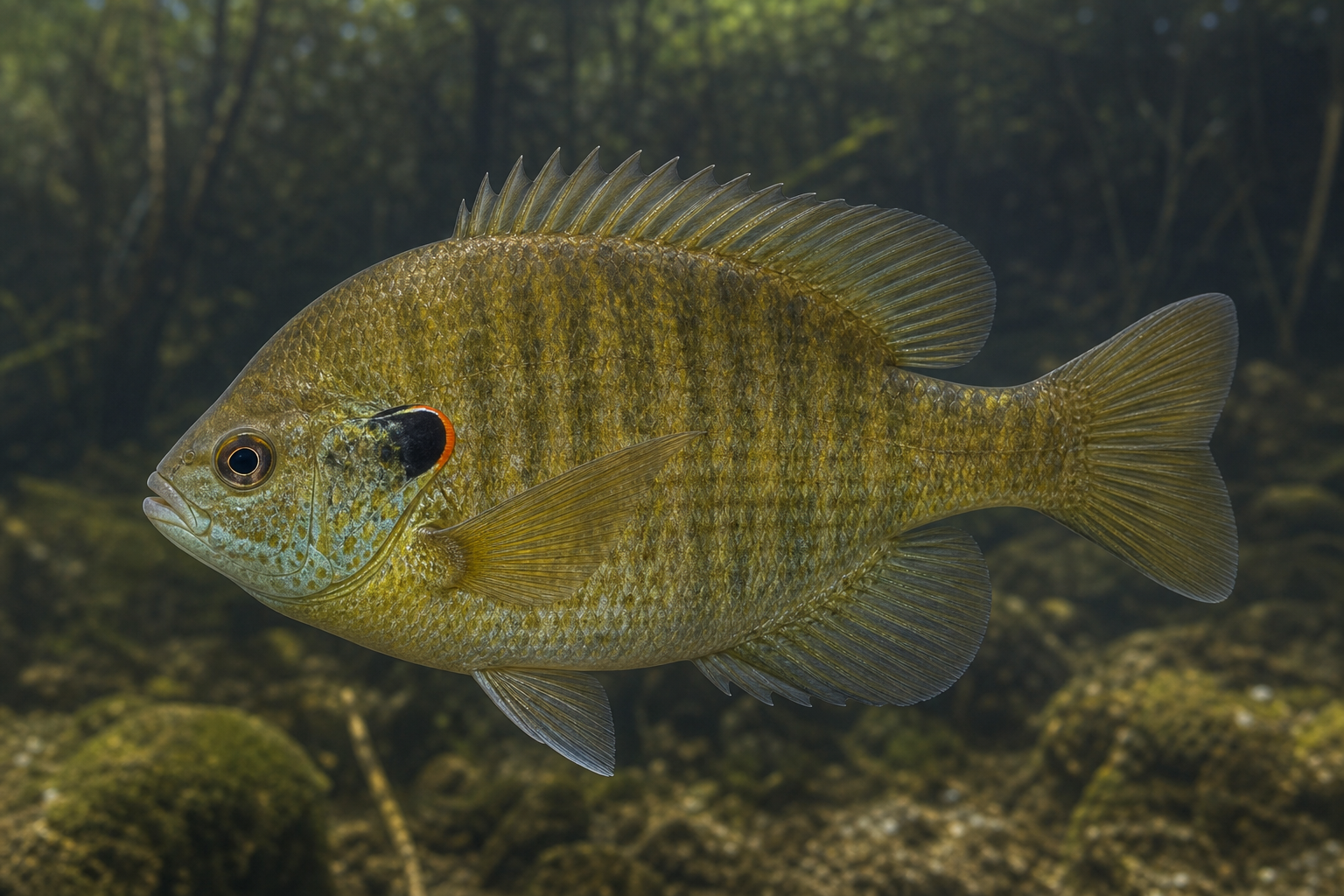
Redear sunfish showing a red-edged black ear flap
Freshwater

Redear sunfish

Lepomis microlophus

Also called: Shellcracker

Identify it: Olive-gold body with faint vertical bars and a black gill flap edged in red or orange.

Season
Open year-round unless special-water rules differ
Bag
50 panfish combined per person daily
Size
No statewide minimum
Check current FWC freshwater rules
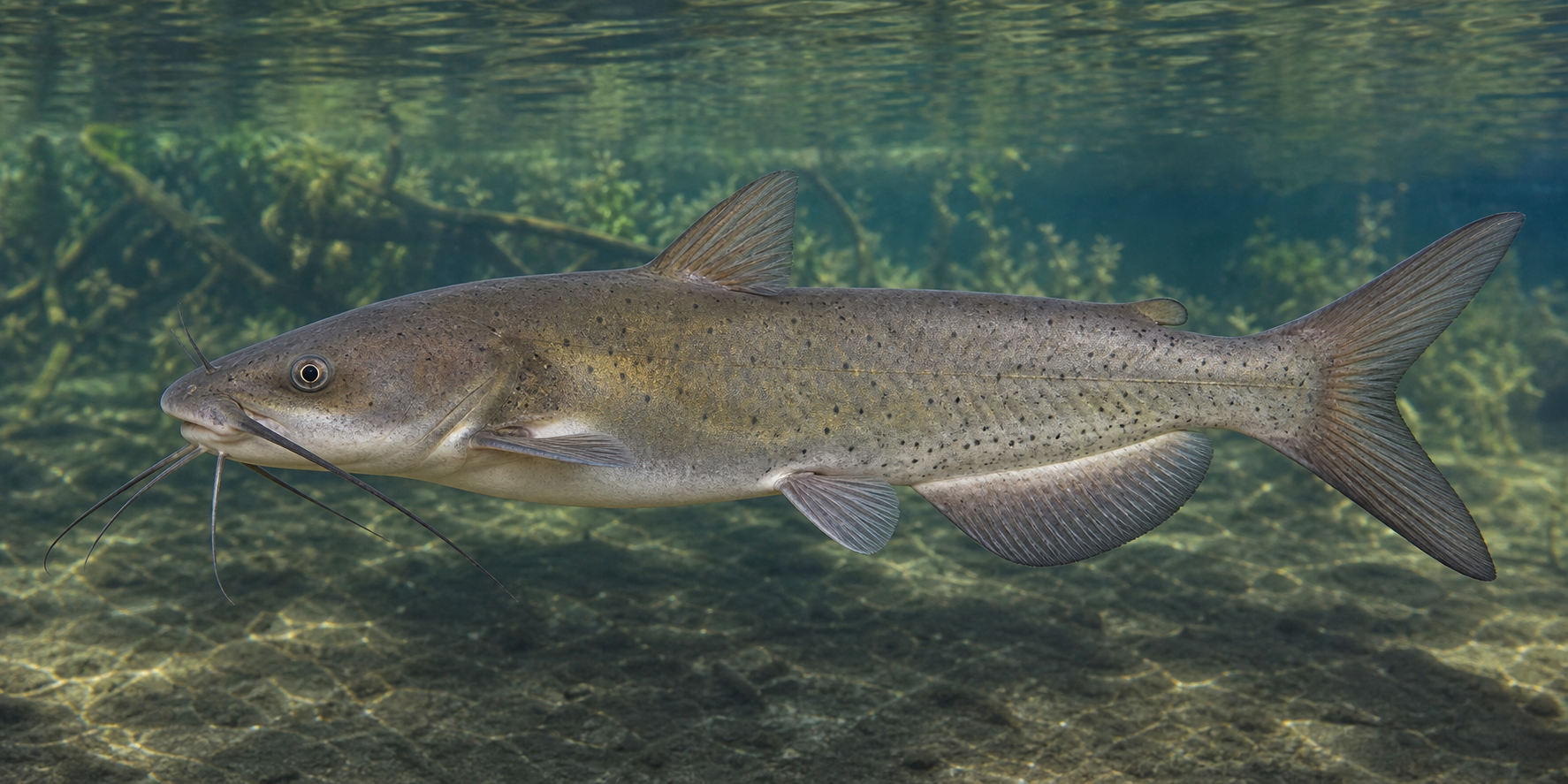
Channel catfish showing black body spots and a deeply forked tail
Freshwater

Channel catfish

Ictalurus punctatus

Also called: Channel cat

Identify it: Olive-gray body with scattered black spots, a deeply forked tail, rounded anal fin, and eight barbels.

Handling warning: Watch the sharp dorsal and pectoral spines.

Season
Open year-round unless local rules differ
Bag
No general statewide nongame limit; some FMAs set limits
Size
No statewide minimum
Check current FWC freshwater rules
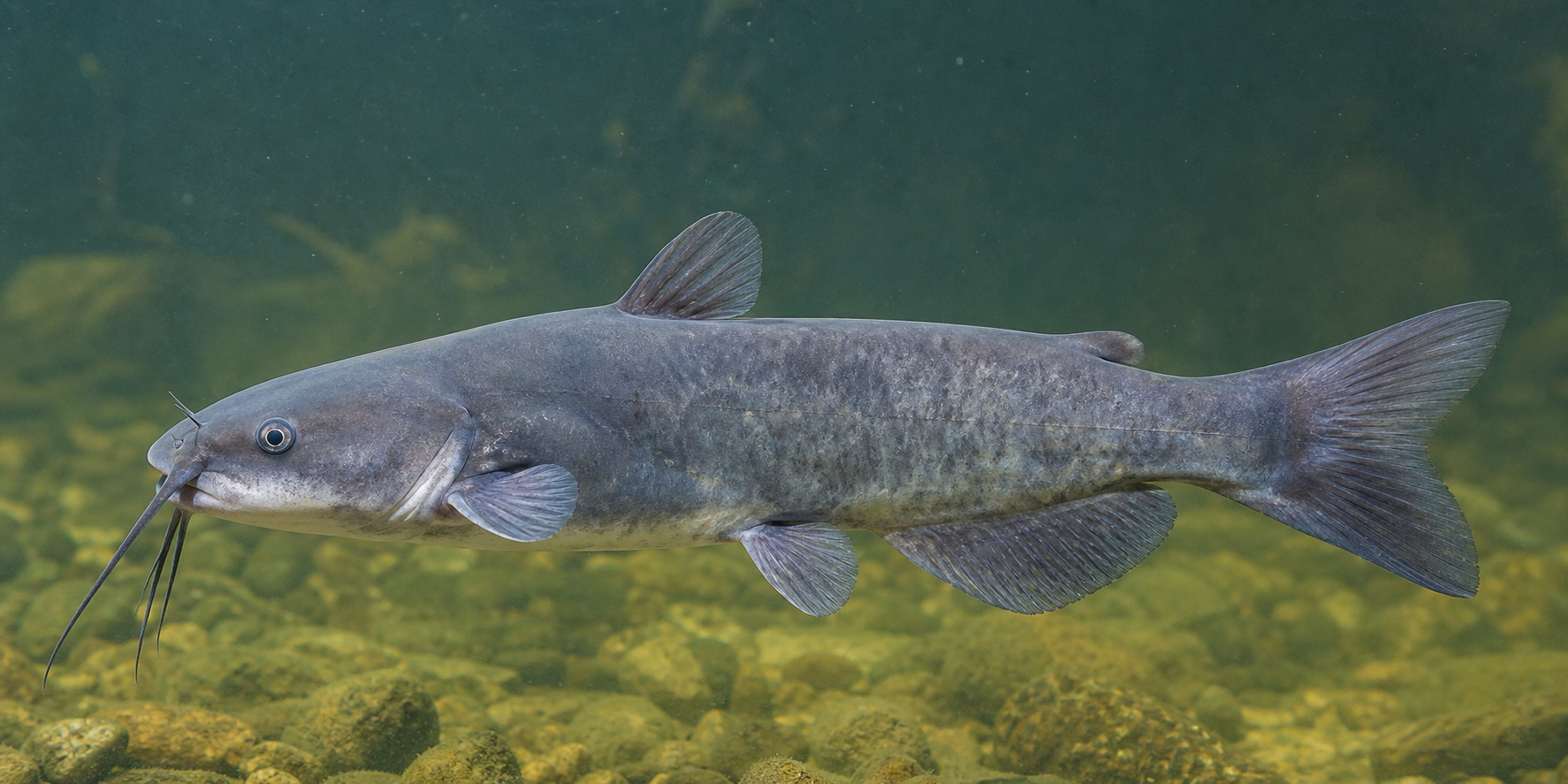
White catfish showing a broad head and moderately forked tail
Freshwater

White catfish

Ameiurus catus

Also called: White cat

Identify it: Broad head, blue-gray mottled sides, moderately forked tail, and a shorter, rounder anal fin than a channel catfish.

Handling warning: Watch the sharp dorsal and pectoral spines.

Season
Open year-round unless local rules differ
Bag
No general statewide nongame limit; some FMAs set limits
Size
No statewide minimum
Check current FWC freshwater rules
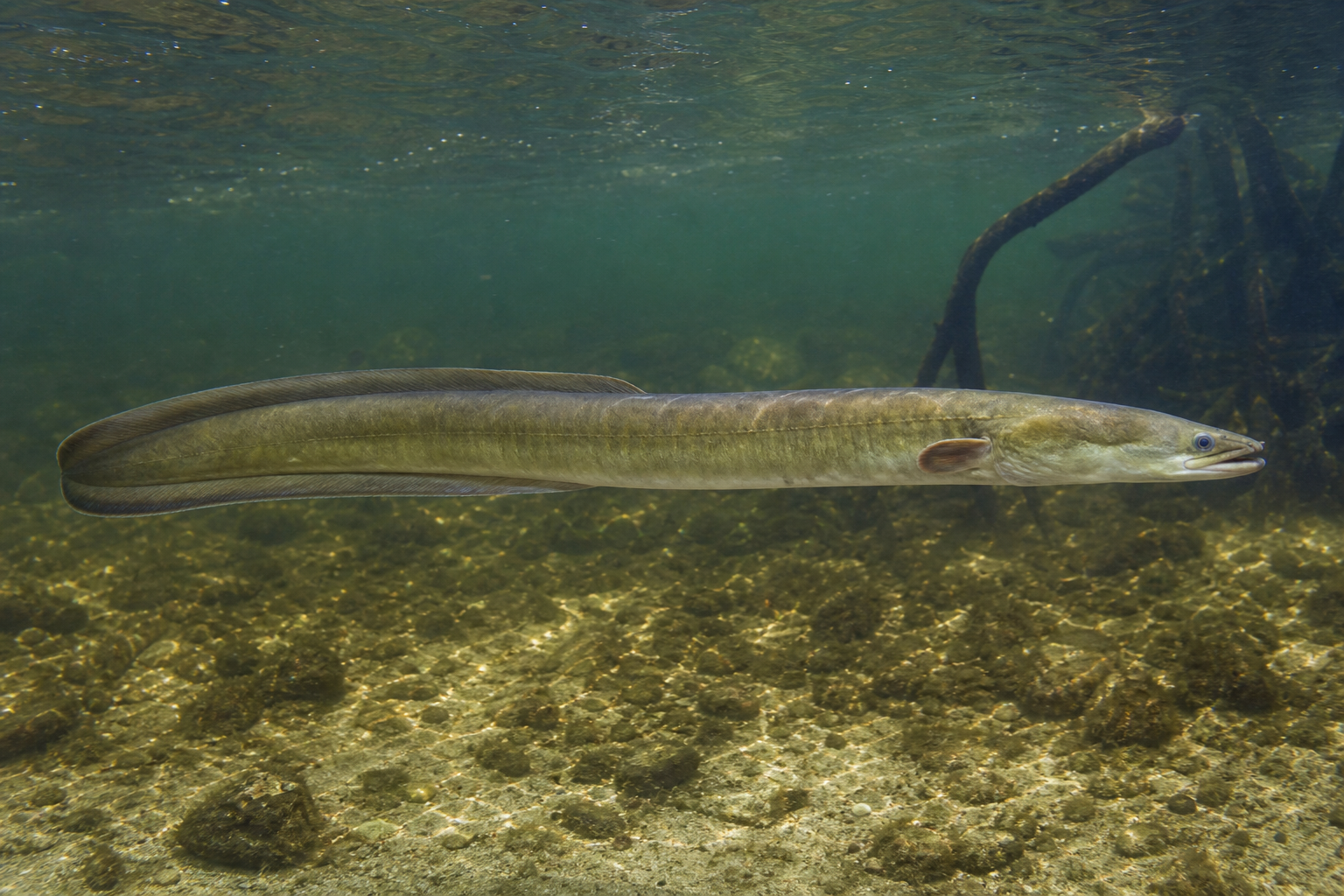
American eel showing its long olive body, small pectoral fins, and continuous tail fin
Freshwater and brackish water

American eel

Anguilla rostrata

Also called: Freshwater eel

Identify it: Long snake-like olive-brown body, small pectoral fins, one continuous fin around the tail, and a lower jaw that projects beyond the upper jaw.

Season
Open year-round unless local rules differ
Bag
25 per person daily
Size
9-inch minimum total length
Check current FWC freshwater rules